
Last updated October 16, 2026
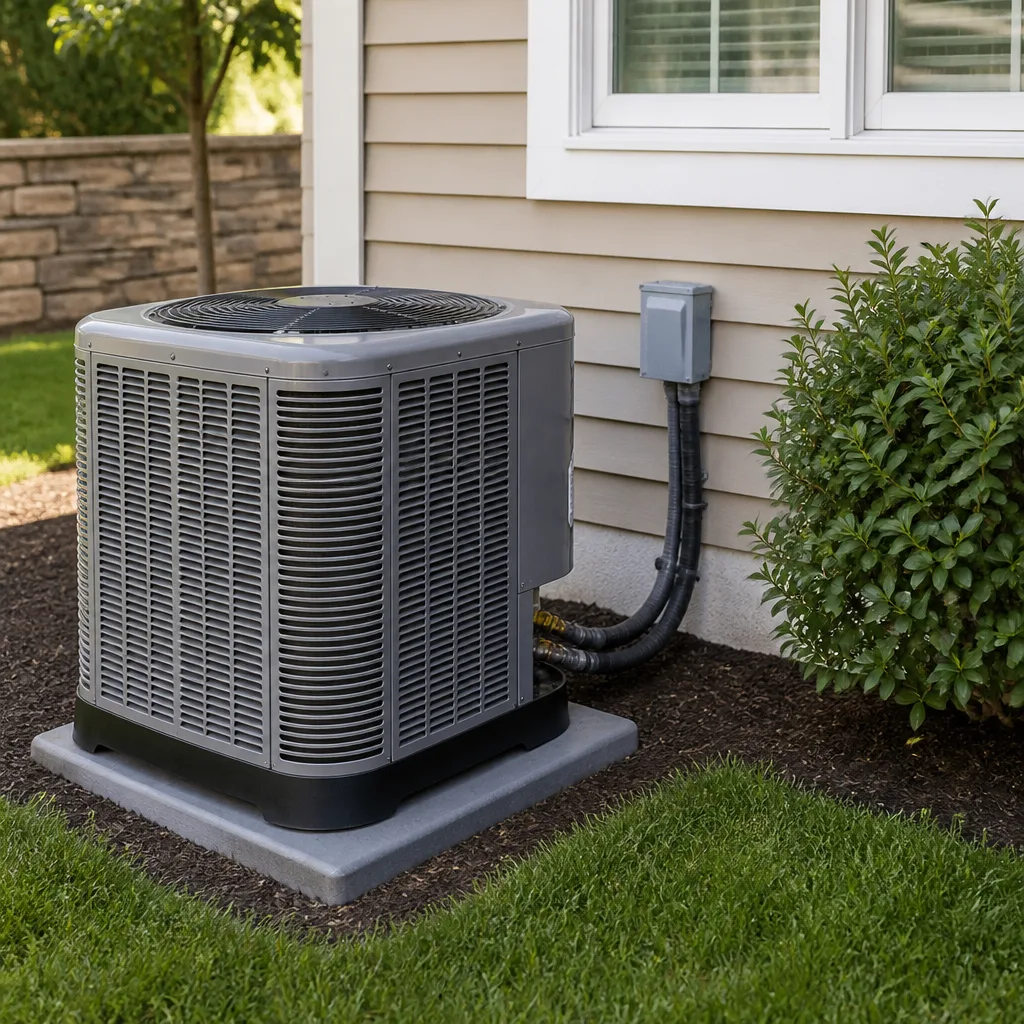 AC repair
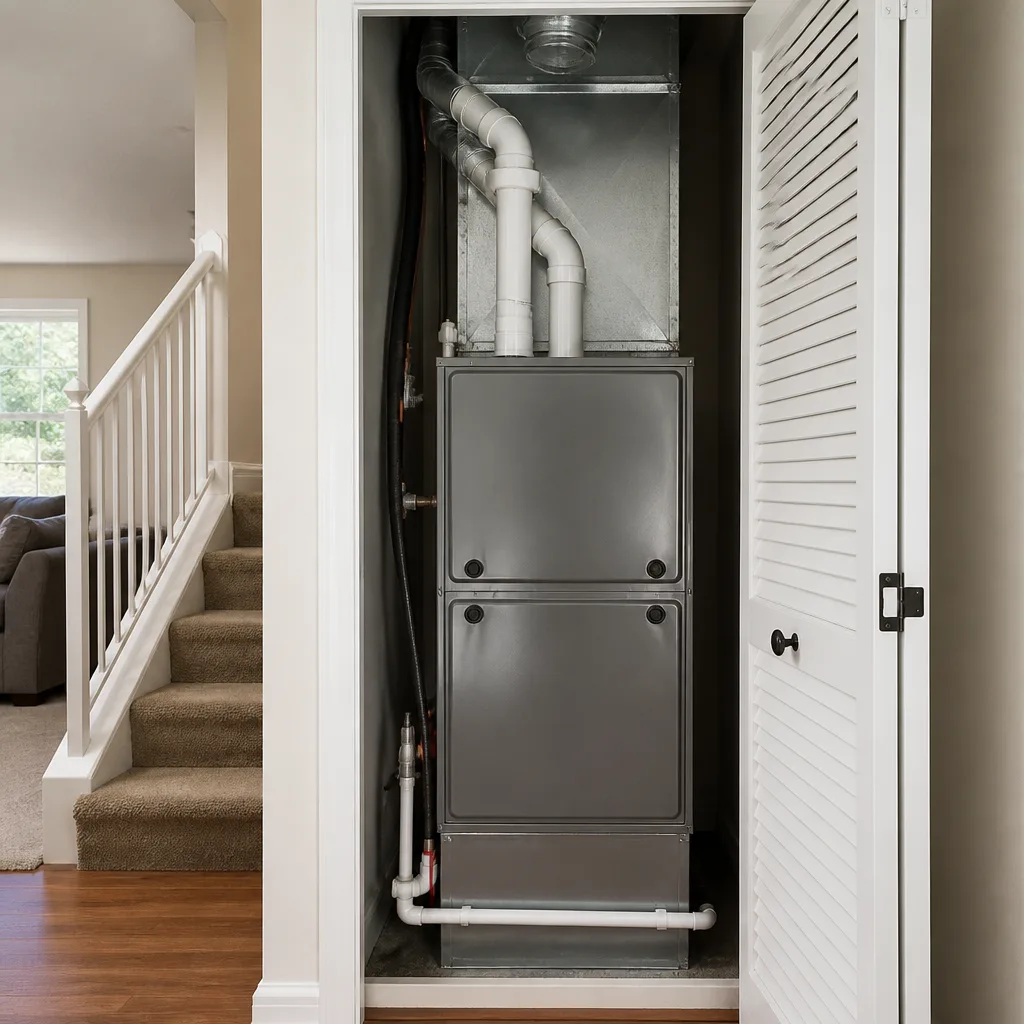 Furnace & heating
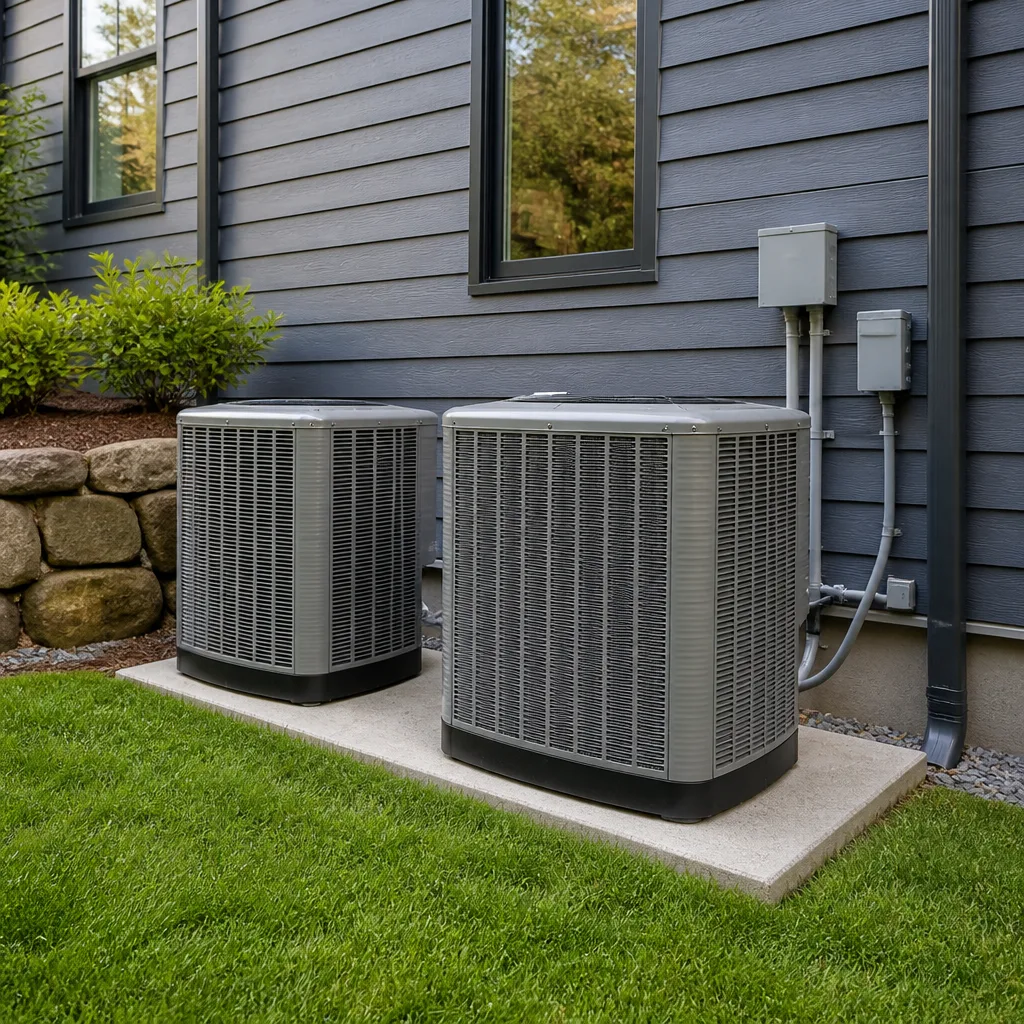 Heat pumps
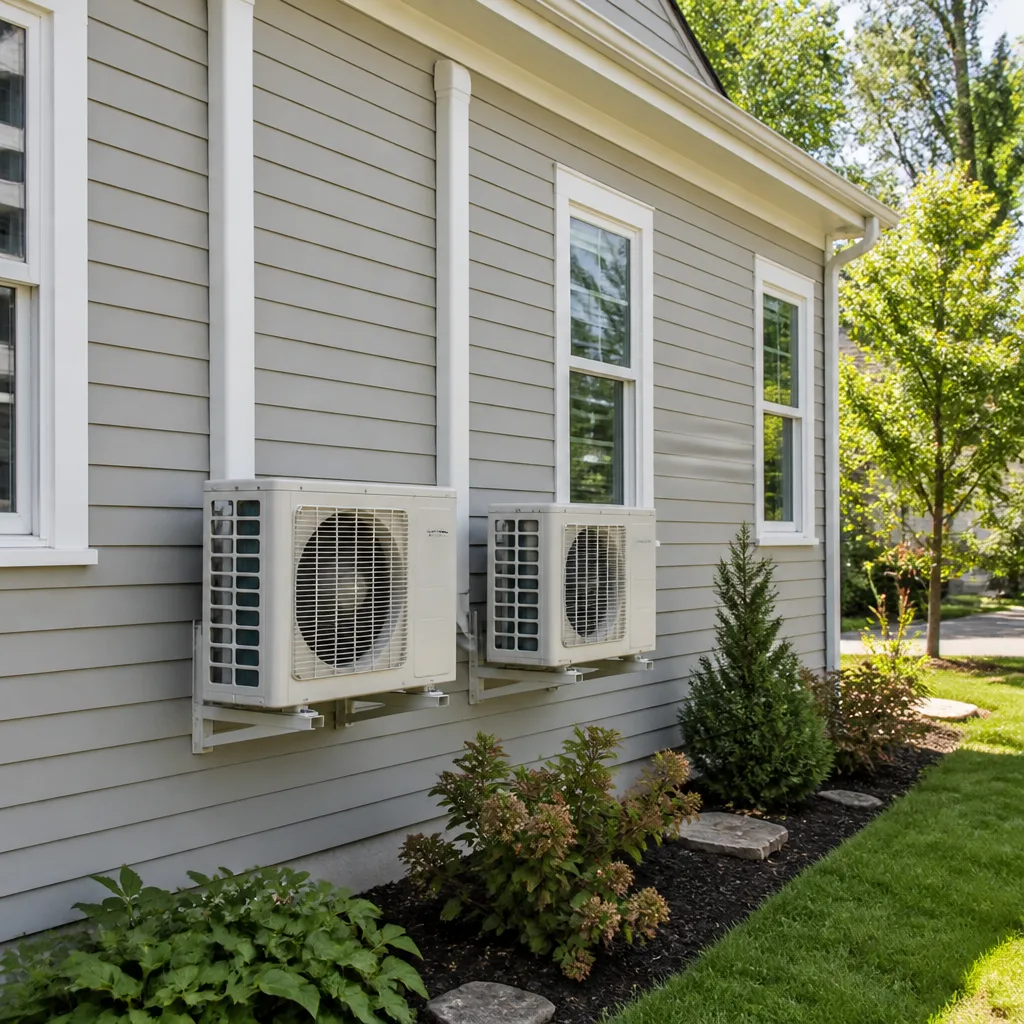 Ductless mini splits
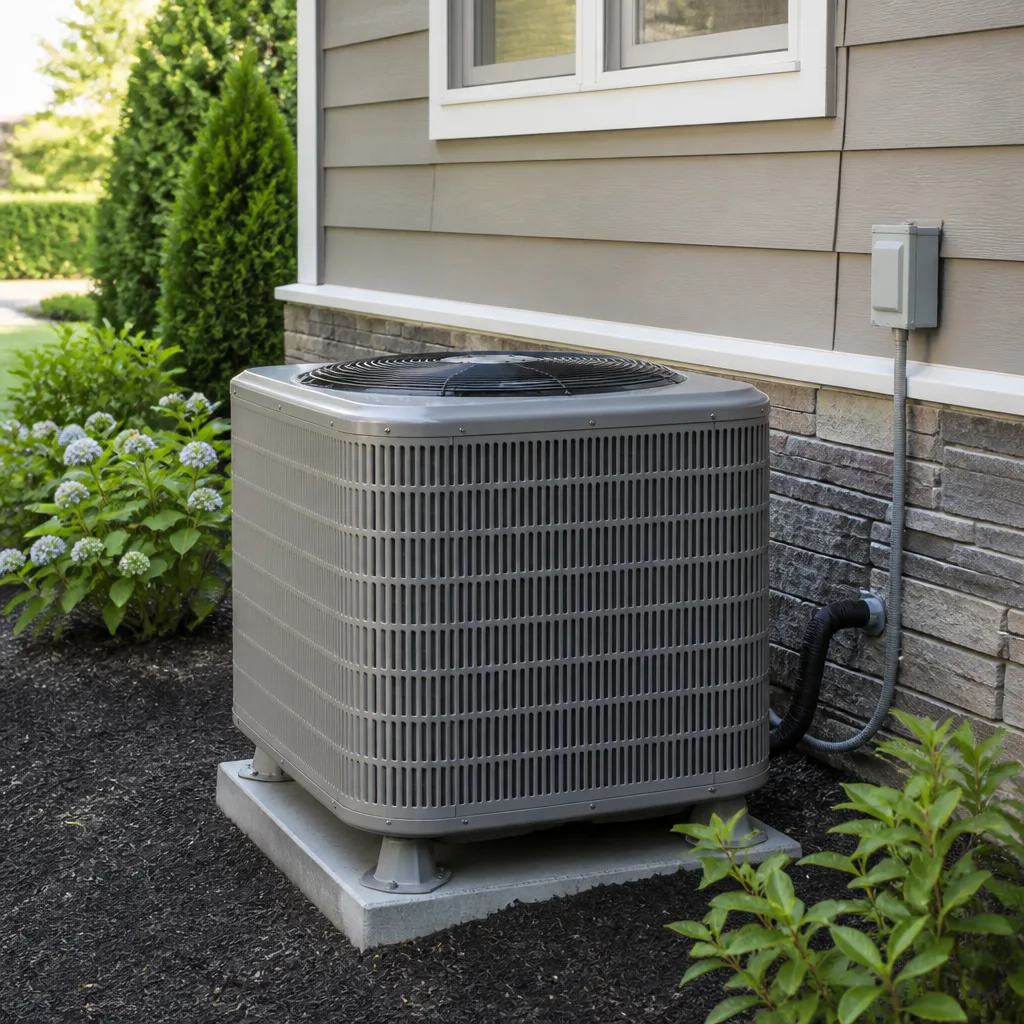 Carrier
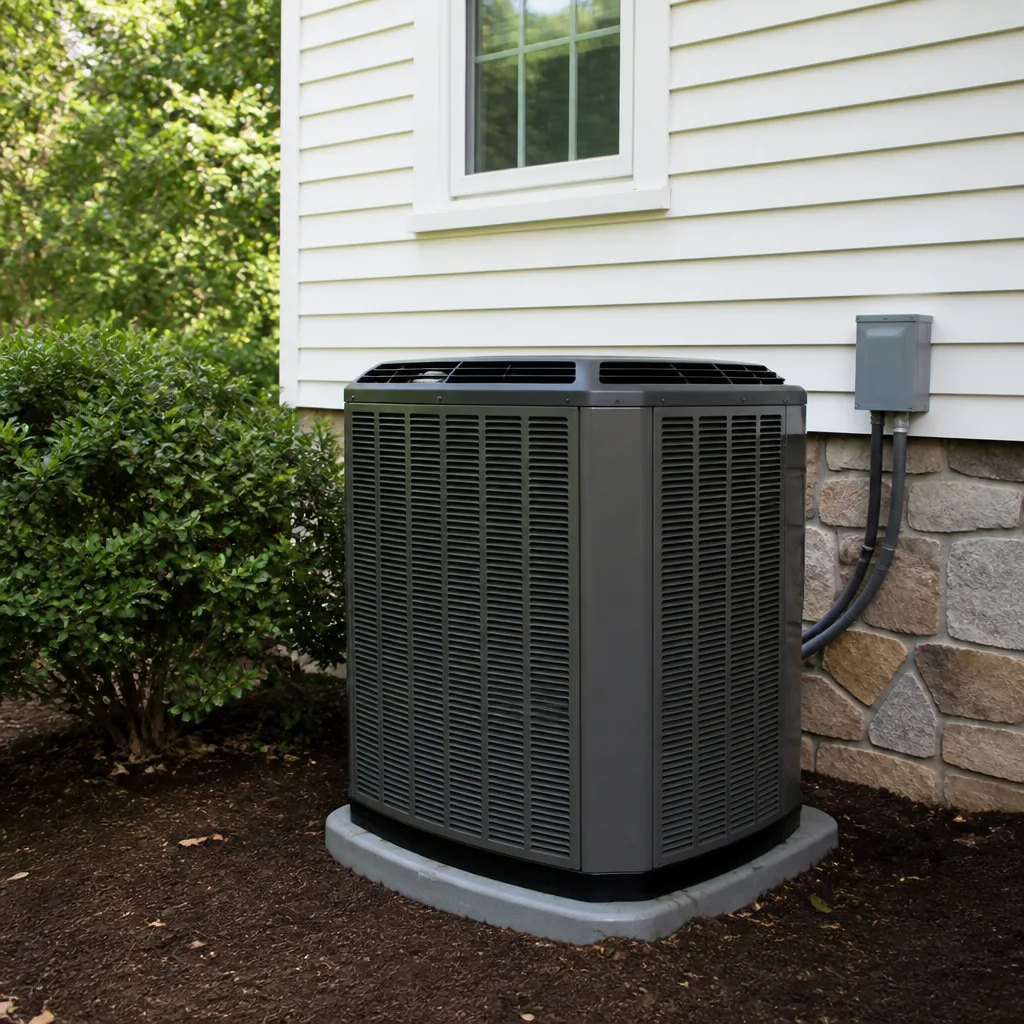 Trane
Trane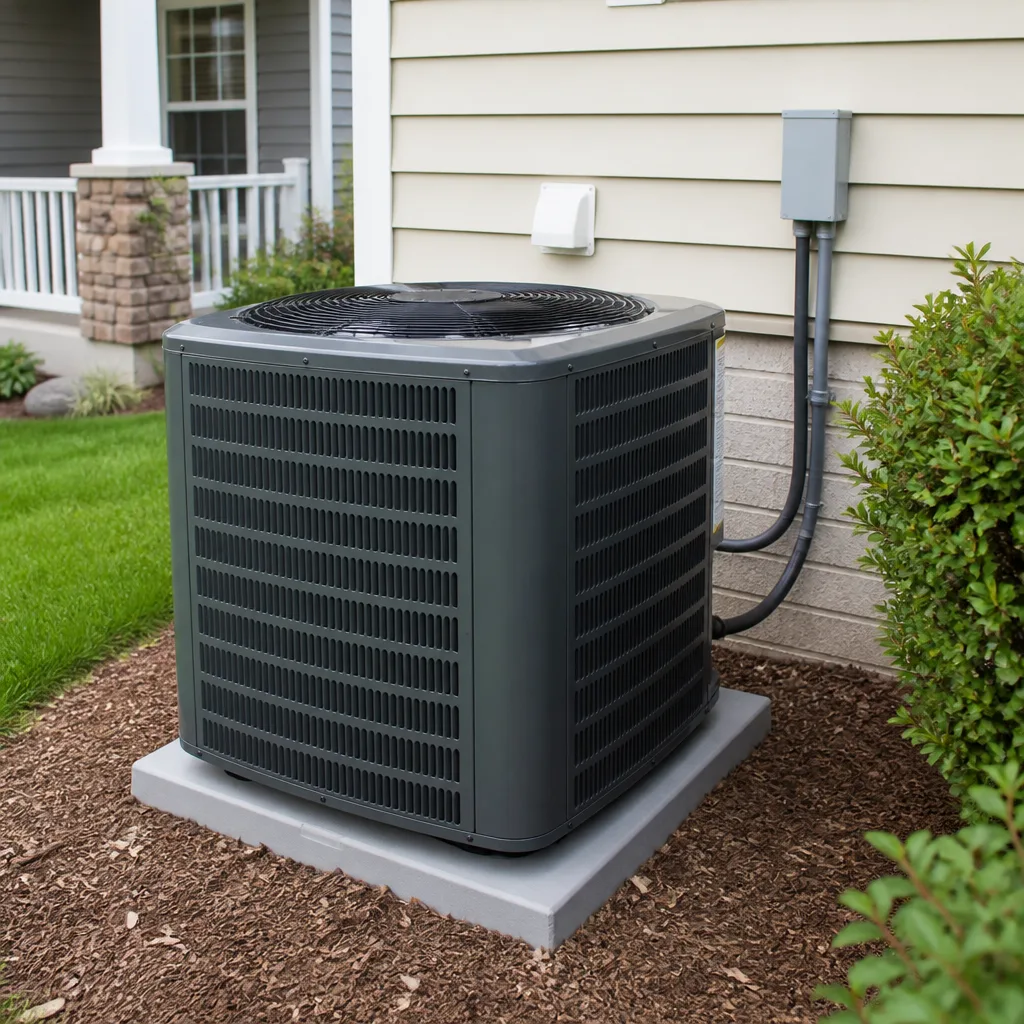 Goodman
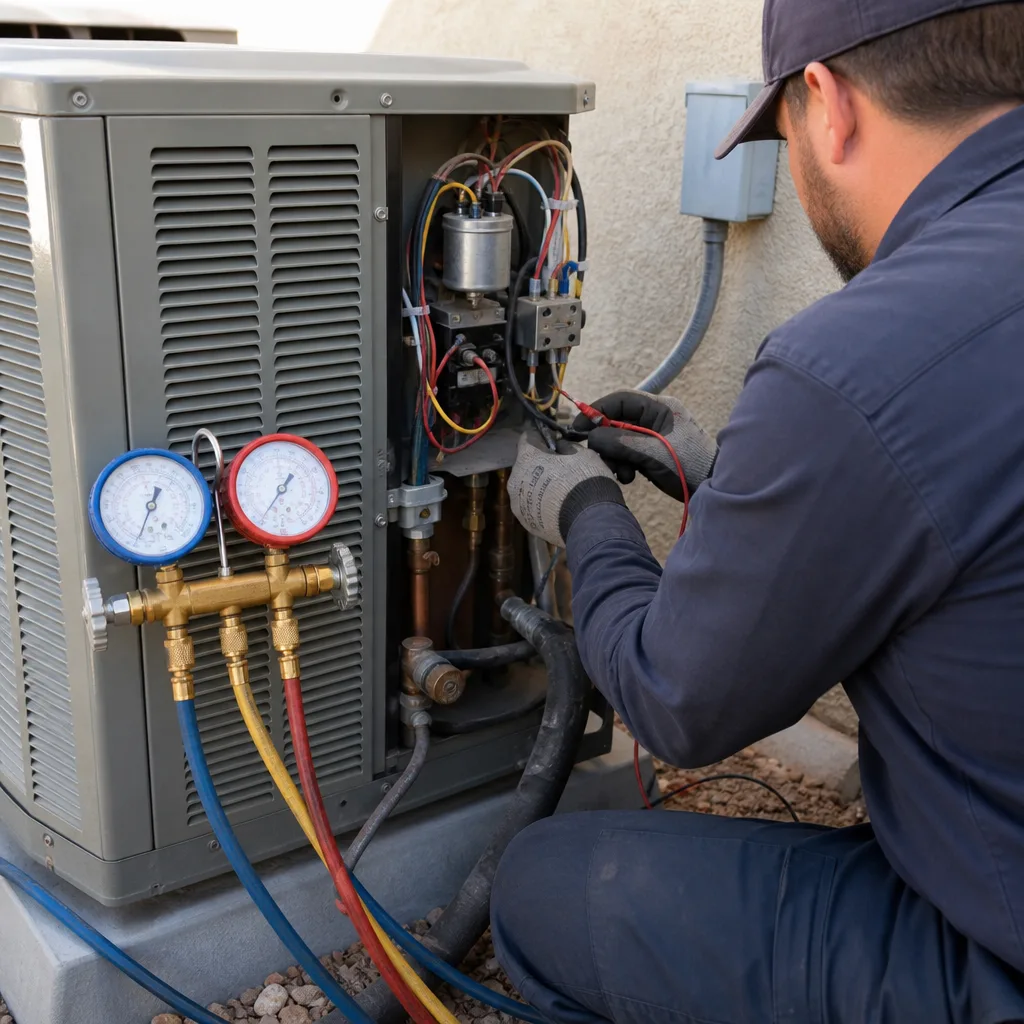
Seasonal tune-up and full diagnostic on your Carrier, Trane, or Goodman system - readings shown to you before any repair is proposed
Diagnosis first, numbers second - you approve the repair price before a single part goes in.
Get your free estimateThe Complete Guide to HVAC in Henderson
Henderson hit 117°F in July 2023, and the repair calls that week weren’t just from the heat. They were from systems that had been running on dirty coils and low refrigerant since April, quietly losing capacity until the first triple-digit day finished them off. This guide covers what actually determines HVAC performance and cost in Henderson: Clark County’s permit thresholds, the valley’s temperature swings, subdivision-era ductwork, and how to read a quote before you sign it. By the end, you’ll know what to expect from your system, what repairs should cost, and when a written guarantee matters more than a low bid.
Quick Answer
HVAC in Henderson means sizing equipment for a high-desert climate with 40-degree daily temperature swings, confirming your contractor pulls Clark County permits when required, and checking whether your home’s ductwork can actually handle modern equipment. Most furnace repairs in the valley run $150 – $450 depending on the part, while a full system replacement typically lands between $8,000 and $16,000 depending on SEER rating, tonnage, and ductwork condition. Hire a company that puts the price in writing before work starts and guarantees the repair in writing for a full year, and read our How to Hire a HVAC Contractor in Henderson: A Step-by-Step Guide before you choose.
Styles & brands we work with
Table of Contents
- Why Henderson’s Climate Punishes HVAC Systems Differently
- Clark County Permit Requirements: What Triggers an Inspection
- The Subdivision Ductwork Problem in Green Valley, Anthem, and Seven Hills
- Brand Availability and Parts Stock in the Henderson Market
- How to Read an HVAC Quote in Henderson Before You Sign
- SEER Ratings, Altitude, and Why Henderson Is Not Phoenix
- A Realistic Maintenance Schedule for Henderson Homes
- Common Mistakes to Avoid
- When to Call a Professional
- Frequently Asked Questions
Why Henderson’s Climate Punishes HVAC Systems Differently
Henderson sits at roughly 1,900 feet of elevation in the Mojave Desert, and that number matters more than most homeowners realize. At this altitude, air is thinner. It holds less heat, which means refrigerant pressures run lower than they would at sea level for the same outdoor temperature. That’s not a defect. It’s physics. But it does mean a technician who learned the trade in Phoenix or at Las Vegas Strip properties and dials in refrigerant by pressure alone can overcharge a Henderson system, and an overcharged system runs hot, trips its high-pressure switch, and shortens compressor life.
The daily temperature swing is the second factor generic guides miss. In July, Henderson routinely swings 35 to 40 degrees between the 4 a.m. low and the 4 p.m. high. Your system is not running a steady marathon. It’s doing interval sprints: cycling down overnight, then slamming on at full load during the late-afternoon peak. Equipment that is marginally sized or marginally dirty will fail during that afternoon spike, not at 2 a.m. In our experience, that’s exactly when the call comes in. A system that kept the house at 74 all night can’t hold 78 by 5 p.m., and the homeowner assumes it just broke. Usually, it’s been degrading for months.
Low humidity compounds the issue. Henderson’s relative humidity often sits in the single digits on a July afternoon. Dry air cools faster, but it also evaporates moisture from coil fins faster, and that accelerates the accumulation of the fine caliche dust that moves through this valley on windy days. We routinely pull coils in Henderson that are coated in a gray paste of dust and pollen that never washed off, because it never rains. A coil that dirty loses 20 to 30 percent of its heat-exchange capacity before the homeowner notices anything. The system just runs longer cycles to compensate, and the electric bill climbs a little each month.
Clark County Permit Requirements: What Triggers an Inspection
Clark County Building Department jurisdiction covers Henderson, and the permit thresholds here are specific. Any time an HVAC contractor replaces equipment (condenser, air handler, furnace, heat pump) or modifies the ductwork, a mechanical permit is required, and the work must pass inspection. This is not optional, and it is not a technicality. Work done without a permit can become a problem at resale, and it can void the manufacturer’s warranty on the new equipment.
Here is what triggers a permit in Henderson:
- Full system replacement or furnace replacement: A mechanical permit is required, with a rough and final inspection. The contractor must be licensed with the Nevada State Contractors Board.
- Condenser or air handler replacement: Permit required, even if the other half of the system stays. The permit covers refrigerant handling and electrical reconnection.
- New ductwork or significant duct modification: Permit required, and the duct design must meet the current International Mechanical Code as adopted by Clark County.
- Adding a new return or supply run: This changes system static pressure and requires a permit.
- Thermostat replacement, capacitor replacement, contactor replacement, sensor replacement: No permit required. These are component-level repairs.
- Refrigerant recharge: No permit required by itself. But here is the catch: a recharge done without finding and fixing the leak is against EPA regulations for systems over 50 pounds of charge, and in practical terms, a system that needs a full recharge almost always has a leak that will need a repair. If the repair involves opening the refrigerant lines, the work may fall under equipment repair rather than replacement, but a credible contractor will document it.
If you’re getting bids and one contractor says a permit “isn’t really necessary” on a task that falls in the first four bullets above, that’s a red flag larger than the quote itself. The permit fee is a line item, typically in the $150 – $400 range for residential mechanical work in Clark County, depending on the scope. It should appear on the written quote as a separate line. If it doesn’t, ask why not.
The Subdivision Ductwork Problem in Green Valley, Anthem, and Seven Hills
Henderson’s master-planned subdivisions built between roughly 1990 and 2005 share a common problem, and it’s not the equipment. It’s the ducts. Homes in Green Valley, Anthem, Seven Hills, and the older MacDonald Ranch sections were built on the cheap when it came to airflow design. Builders sized the flex duct for the minimum airflow that would pass a city inspection with a 10-SEER or 12-SEER system. Most of those original systems are long gone, and homeowners have since replaced them with 16-SEER, 18-SEER, or variable-speed equipment.
Here’s the problem: higher-efficiency equipment moves air differently. A modern system with a variable-speed blower and a bigger evaporator coil needs more airflow across that coil to hit its rated capacity. If the ductwork is undersized, the static pressure climbs, the blower works harder, and the system never delivers its rated efficiency. In the worst cases, coils freeze, compressors fail early, and the homeowner blames the equipment brand when the ductwork was the bottleneck all along.
What does it cost to correct? A full duct replacement in a typical 2,000 to 2,800-square-foot Henderson home runs $4,000 to $9,000 depending on accessibility, the number of runs, and whether the attic is open truss or tight. That’s real money, and we tell homeowners plainly when it’s needed and when it isn’t. A partial fix, adding one or two return-air runs to reduce static pressure, runs $800 to $1,500 and solves a noticeable share of the problem. The test we run before recommending anything is a static-pressure measurement. If it’s above 0.7 inches of water column on a standard system, the ducts are strangling the equipment. That number tells us everything, and it should appear on the service ticket if a contractor is recommending ductwork.
The point is not that every Henderson home needs new ducts. Most don’t. But if you’ve replaced your equipment and the upstairs still won’t cool, or the system is loud, or the electric bill didn’t drop after the new unit went in, ductwork is the first thing to check, not the last.
Learn more about how we handle AC Repair in Henderson when airflow issues show up.
Brand Availability and Parts Stock in the Henderson Market
Here’s something that rarely appears in a guide like this: the brand on the equipment matters less than the parts network behind it, and that network is uneven in Henderson. The valley has strong local distribution for Carrier, Trane, Lennox, Goodman, and Rheem. That means a capacitor, a control board, or an inducer motor for those brands is usually stocked at a local supply house within a 30-minute drive. A repair gets done the same day or next day.
Other brands, including some excellent equipment from York, Daikin, Bryant, and American Standard, have thinner parts coverage in the Henderson market. The equipment itself is competitive. But when a specific control board fails, the part may have to come from a regional warehouse in California or Arizona, and that adds two to five business days to the repair. In July, that’s the difference between a hotel room for a week and sleeping in your own bed.
This is not an argument to avoid those brands. It’s an argument to ask one question before you sign a replacement quote: “Where is the warranty parts stock for this specific model, and what’s the typical lead time if a board or motor fails in peak season?” A contractor who knows the answer will tell you. A contractor who doesn’t will talk around it. At Dalton Heating & Air, we service all nine major residential brands because the existing equipment in Henderson homes spans everything. But when we’re quoting a replacement, parts availability in the local market is part of the conversation, and we’ll tell you which brands have the fastest warranty paths in this valley.
If a furnace is the issue, see Furnace Repair in Henderson for the most common fixes and what they cost.
How to Read an HVAC Quote in Henderson Before You Sign
Henderson has more HVAC contractors per capita than almost any market in the country, and the range in how they present pricing is wide. Some quote verbally and then bill whatever the job “actually took.” Some write a price but bury the exclusions on page two. A written quote is the single best consumer protection in this trade, but only if you know how to read one; see our HVAC Cost Breakdown: The Henderson Homeowner’s Reference for 2026 for line-by-line guidance.
Here is the five-point checklist we recommend for any residential HVAC quote in Henderson:
- The equipment model numbers appear on the quote. Not just “3-ton 16 SEER unit.” The actual model number tells you exactly what’s being installed. If it’s not there, ask for it. A legitimate contractor has no reason to hide it.
- The permit fee is a separate line item. If the quote says “permit included” but doesn’t show the fee, the contractor may be pricing the permit at $0 and then deciding later whether to pull it. That’s how homeowners end up with unpermitted replacements.
- The ductwork scope is spelled out. “Reconnect existing duct” is not the same as “new plenum and three new supply runs.” If the quote doesn’t say, you’re assuming a scope the contractor may not intend.
- The warranty terms are in writing. Manufacturer parts warranties are one thing. Labor warranties are another. At Dalton Heating & Air, every repair is guaranteed in writing for a full year. If it fails in that time, we return at no charge. That’s a term of The Garrison Standard, and it’s on the paperwork, not assumed.
- Any exclusions are explicit. Drywall patching, electrical panel upgrades, crane work, and thermostat replacement are common exclusions. A quote that doesn’t list exclusions is a quote that can grow at the door.
The deepest difference in the Henderson market is between written and verbal pricing norms. Some companies still operate on verbal estimates, and those are the ones where the final invoice drifts. We don’t do verbal pricing. Since 2003, every Dalton Heating & Air job has included a written price before any work begins, on every job, without exception. If a contractor won’t put the number in writing before the truck rolls, do not sign the work order.
This same discipline applies to replacements and full installations. Explore Heat Pump Installation in Henderson for a breakdown of what a proper written replacement quote includes.
SEER Ratings, Altitude, and Why Henderson Is Not Phoenix
SEER, or Seasonal Energy Efficiency Ratio, is the cooling efficiency metric for HVAC equipment. Higher SEER means lower electricity use per unit of cooling. The federal minimum for new equipment in the Southwest region, which includes Nevada, is 15.0 SEER2 for split-system air conditioners as of 2023. But here’s the altitude wrinkle most guides miss: SEER is rated at sea-level test conditions, and at Henderson’s roughly 1,900 feet of elevation, actual delivered capacity runs about 3 to 5 percent below the nameplate rating.
That’s not enough to oversize your equipment by a full ton. It is enough that a system that performs acceptably in Phoenix at 110°F may struggle in Henderson at 113°F, because the thinner air reduces the condenser’s ability to reject heat even as the compressor works against slightly lower suction pressures. The practical takeaway: when a contractor runs a Manual J load calculation (the industry-standard cooling-load calculation), the calculation should use Henderson-specific design temperatures of roughly 107°F dry bulb in summer and 32°F in winter, not Phoenix’s 110°F or national defaults.
Altitude also affects gas furnaces. A furnace installed at elevation needs a burner orifice sized for the thinner air, or it runs rich and produces excess carbon monoxide. The correct orifice for Henderson’s elevation is part of the installation spec, and a contractor who slaps in a sea-level furnace without checking the burner setup is creating a safety problem, not just a performance one. When we install a furnace in Henderson, the combustion analysis is part of the job, and the numbers go on the ticket.
If you’re weighing a heat pump against a conventional AC, see our breakdown on Heat Pump Installation in Henderson for how the math plays out in the valley’s mild winters.
A Realistic Maintenance Schedule for Henderson Homes
The maintenance advice you’ll find on national sites says “twice a year, spring and fall.” That’s reasonable for most of the country, but Henderson’s cooling season runs from April through October, and the fall maintenance visit doesn’t map cleanly onto when the equipment actually needs attention. Here’s the schedule that makes sense for this valley.
For cooling: one full service in March or early April, before the first consistent 90-degree days. The service should include coil cleaning, condensate drain treatment, capacitor testing, refrigerant pressure and subcooling or superheat measurement, and a check of the electrical connections. A second abbreviated check in June, during the first real heat spike, finds the early-season failures before they become July emergencies.
For heating: one service in November, focused on the heat exchanger, burner assembly, flue draft, and gas pressure. Henderson’s heating load is modest compared to the Midwest, but the few weeks each year when temperatures dip into the 30s are exactly when a carbon monoxide leak from a cracked heat exchanger becomes lethal. This is not a service to skip.
Between visits, there’s one homeowner habit that matters more than anything else: change the filter. Henderson’s dust load shortens filter life. A standard 1-inch filter in a Green Valley home is done in 30 to 45 days, not the 90 days printed on the package. A clogged filter drives up static pressure, freezes coils, and kills compressors. If you do one thing between professional visits, change that filter.
Common Mistakes to Avoid
- Trusting a verbal quote on a replacement. If the price isn’t in writing before the work starts, the number you heard is not the number you’ll pay. Henderson’s worst billing stories all start the same way.
- Assuming the brand made the system fail. We see homeowners replace a perfectly good condenser because a duct problem made it perform badly. The new unit fails the same way, and now they’ve spent $9,000 on a problem a $900 duct fix would have solved.
- Skipping the permit on a replacement. A no-permit replacement may run fine for years, then surface as a title problem during a sale. The buyer’s inspector flags it, you’ll owe back permit fees plus a fine, and the deal can stall.
- Using a Phoenix rule of thumb for sizing. Henderson’s altitude changes the math. A contractor who quotes “500 square feet per ton” without a Manual J load calculation is guessing. Guesses get expensive.
- Ignoring rising summer electric bills. A system running longer cycles on a dirty coil or low refrigerant can add $40 to $80 a month to an NV Energy bill in July and August, and that’s before it fails. The bill is the early warning system.
- Letting a dead capacitor become a compressor replacement. A failed capacitor costs $100 to $200 to replace. If the system keeps trying to start against a bad capacitor, the compressor heat-soaks and dies. The $200 repair becomes a $3,000 one because the homeowner waited.
When to Call a Professional
Call the moment you hear a hard start: a loud buzz, a click, a pause, then another buzz. That’s a failing capacitor or a compressor struggling, and minutes matter. Call if the system runs but the air from the vents is warm or barely cool, if you see ice on the copper lines, if the thermostat is lit but nothing starts, or if you smell burning dust or a sharp acrid smell from the vents on the first heat cycle of the year. Carbon monoxide detectors are mandatory, but they’re the last line, not the first. If the furnace is short cycling, banging, or the flame is yellow instead of blue, that’s a professional call, not a DIY vs Professional HVAC: The Henderson Homeowner’s Decision Guide situation.
Dalton Heating & Air Henderson offers free estimates in Henderson. Call (775) 593-7060 and a real person answers, 24 hours a day. No voicemail queue, no callback window.
Frequently Asked Questions
Most furnace and AC repairs in Henderson run $150 to $450 depending on the part, with capacitors, contactors, and pressure switches at the low end and control boards and blower motors at the high end. Every repair from Dalton Heating & Air Henderson includes a written price before work starts and a written guarantee for a full year. Call (775) 593-7060 for an exact quote, free of charge.
Yes. Full equipment replacement in Henderson requires a Clark County mechanical permit, and the work must pass a final inspection. The permit fee should appear as a separate line item on your written quote. Repairs like a capacitor or thermostat replacement do not require a permit.
The most common causes in Henderson are undersized return or supply ducting from the subdivision-era construction, a single thermostat controlling both zones, or a dirty coil reducing capacity. We start with a static-pressure test and a temperature split reading before recommending any fix, and the fixes range from a $300 return-air addition to a full duct replacement.
The standard rule is the repair-or-replace line sits at about one-third of replacement cost, but Henderson’s altitude and dust load shorten the economic life of equipment that gets marginal maintenance. If the compressor or heat exchanger has failed on a system over 12 years old, replacement is usually the better spend. A Manual J load calculation and a duct inspection should be part of that decision.
The federal minimum for new AC equipment in Nevada is 15.0 SEER2, but the smart money in Henderson is usually on a 16 to 18 SEER2 unit sized by a proper load calculation. Higher SEER units deliver the most benefit in a climate like ours where the system runs hard for six months a year, and the efficiency gain is not just a marketing number. It shows up on the NV Energy bill.
NV Energy runs periodic rebate programs for high-efficiency heat pumps and AC equipment, and the amounts shift by season and program year. A contractor who handles the rebate paperwork before you pay, rather than telling you to apply yourself afterward, saves you real time. Ask for the current rebate amount in writing, and keep the model numbers on the quote so the rebate application can be verified.
The Bottom Line
Henderson is not Phoenix, and heating and cooling here is shaped by three things most guides don’t mention: altitude-adjusted equipment performance, Clark County permit thresholds, and subdivision ductwork that was built for equipment two decades less efficient than what’s on the market now. The best decisions in this market start with a written price, a load calculation, and a contractor who puts the guarantee in writing before the truck rolls. The rest is just fixing what fails on the first 110-degree day. That’s the game, and in Henderson, it comes every year. Return to the Dalton Heating & Air Henderson home page for more on how we work in this valley.
Written by Marco Benitez, Owner at Dalton Heating & Air Henderson, serving Henderson since 2003. Browse more guides & resources from our team.
See the difference
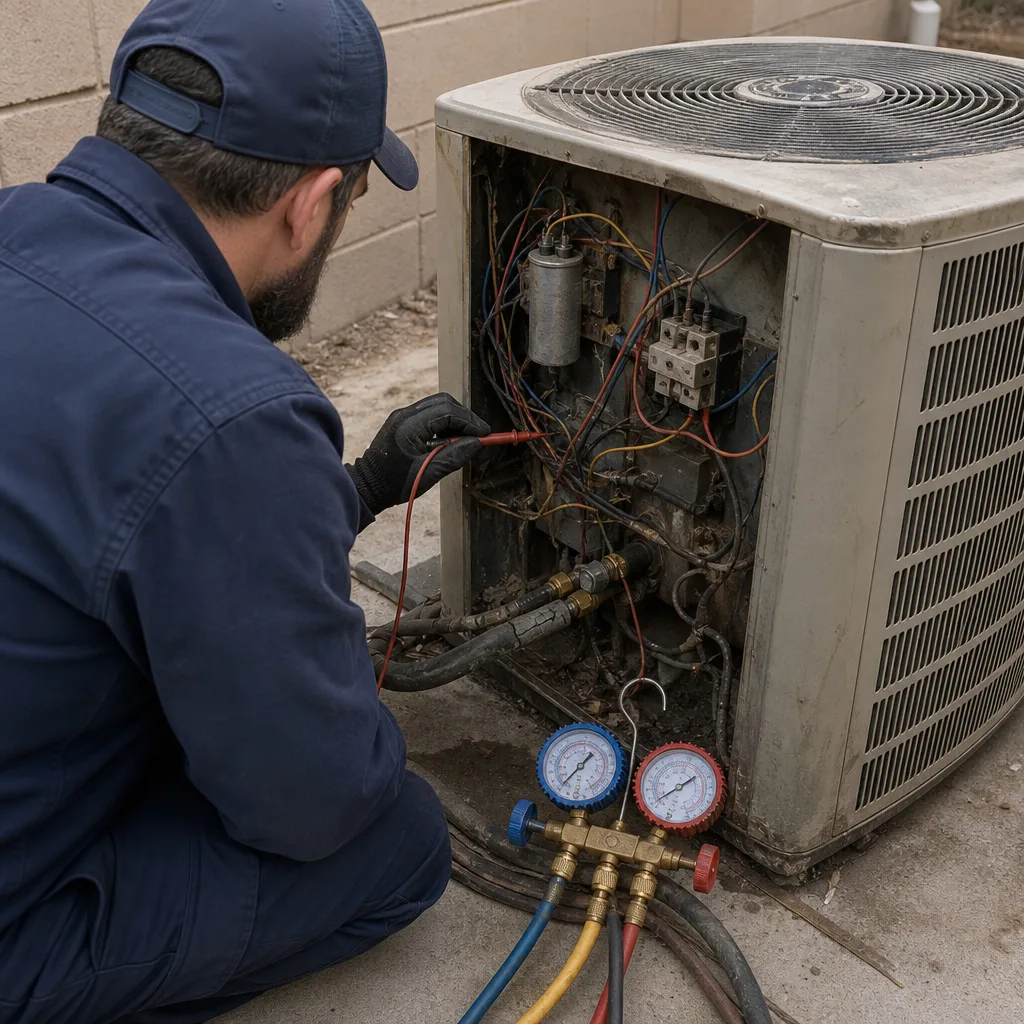 Before
 After
After Before
 After
After Before
 After
After