
Last updated October 16, 2026
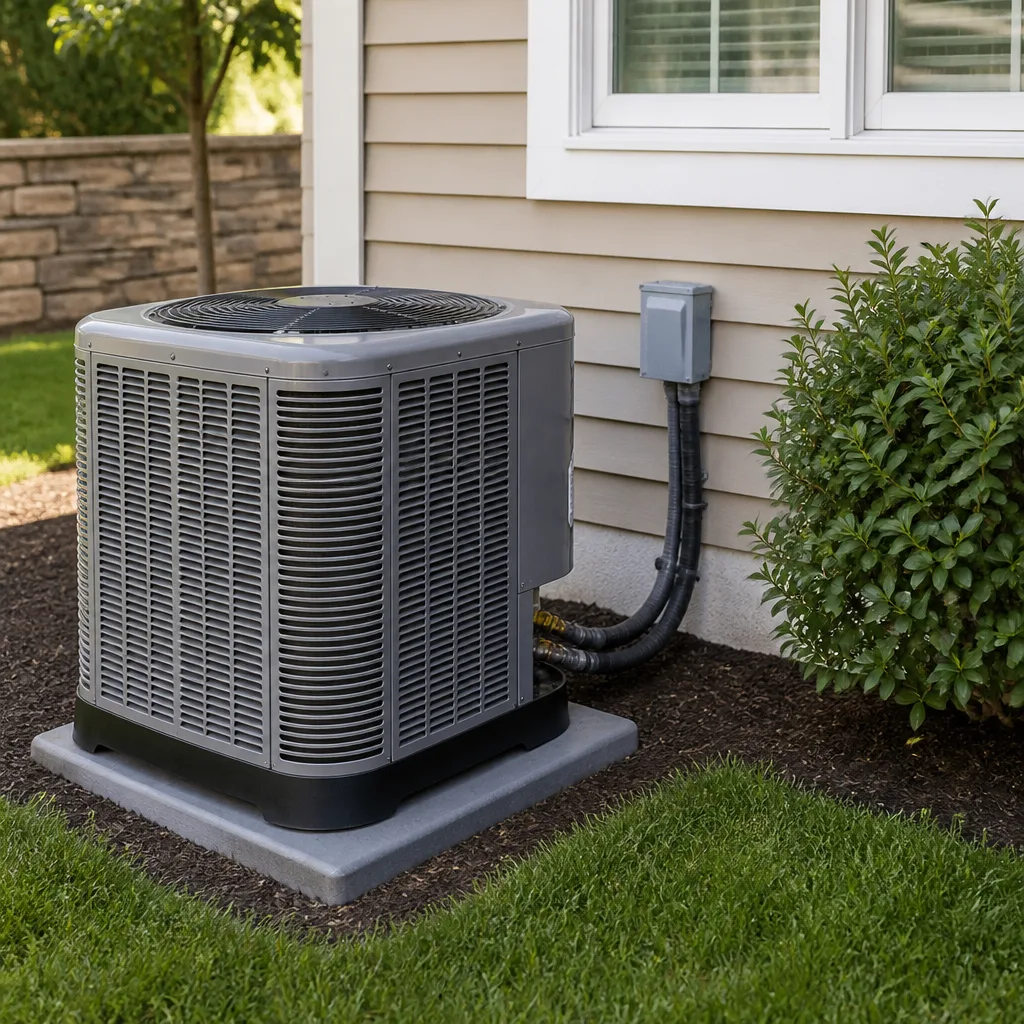 AC repair
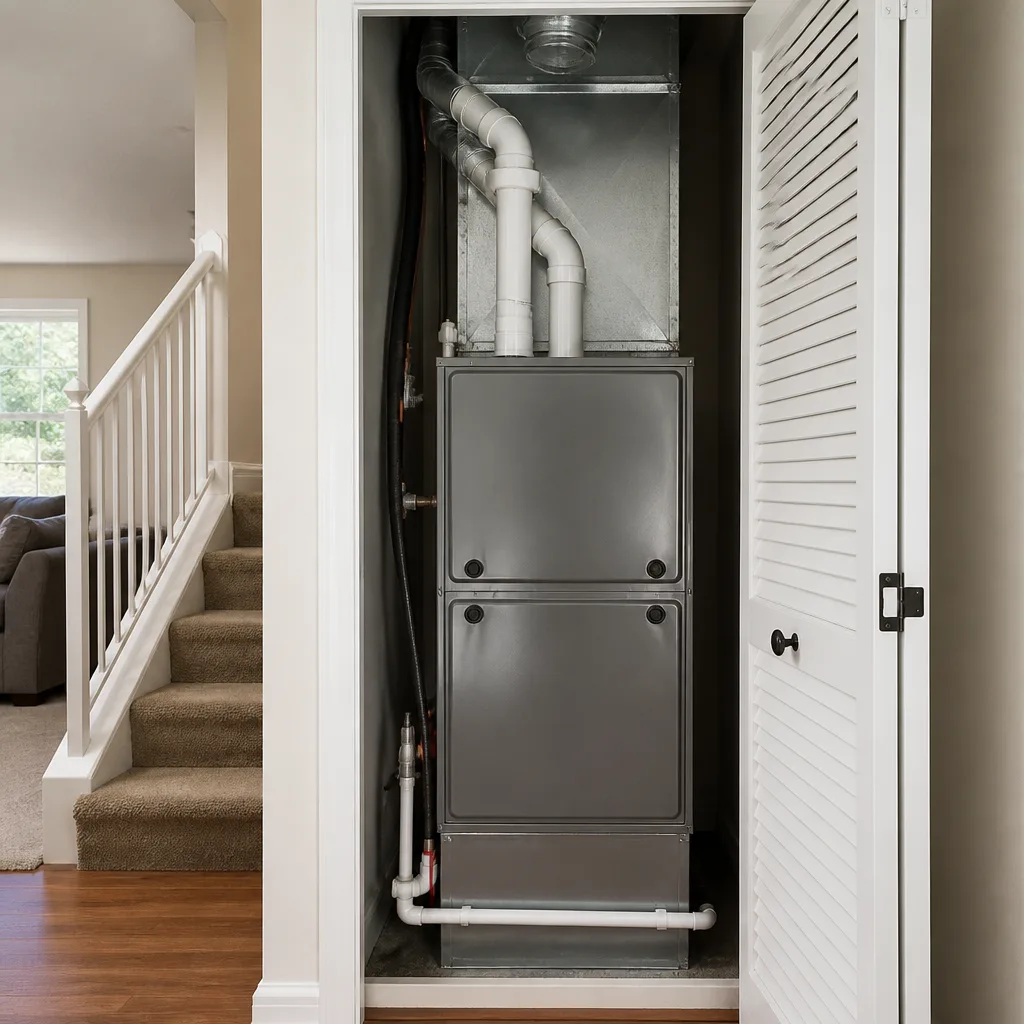 Furnace & heating
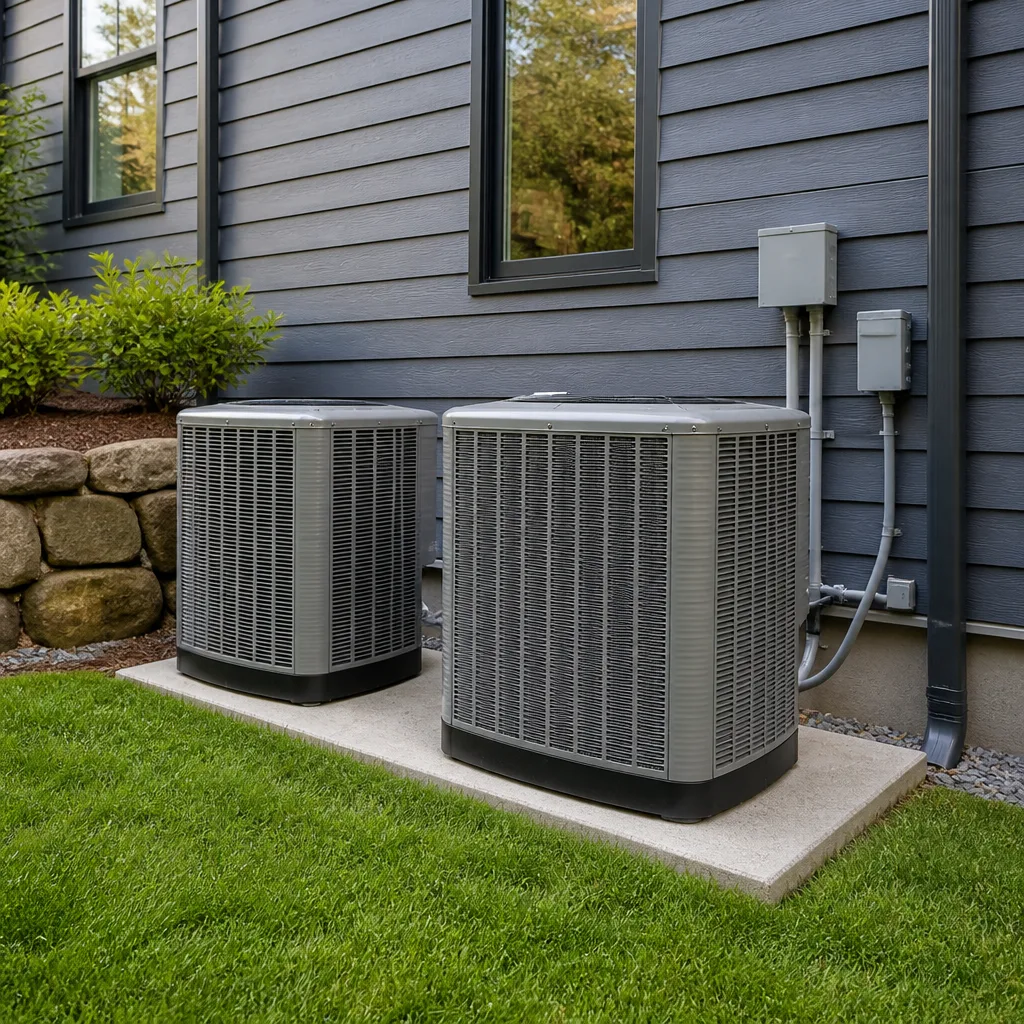 Heat pumps
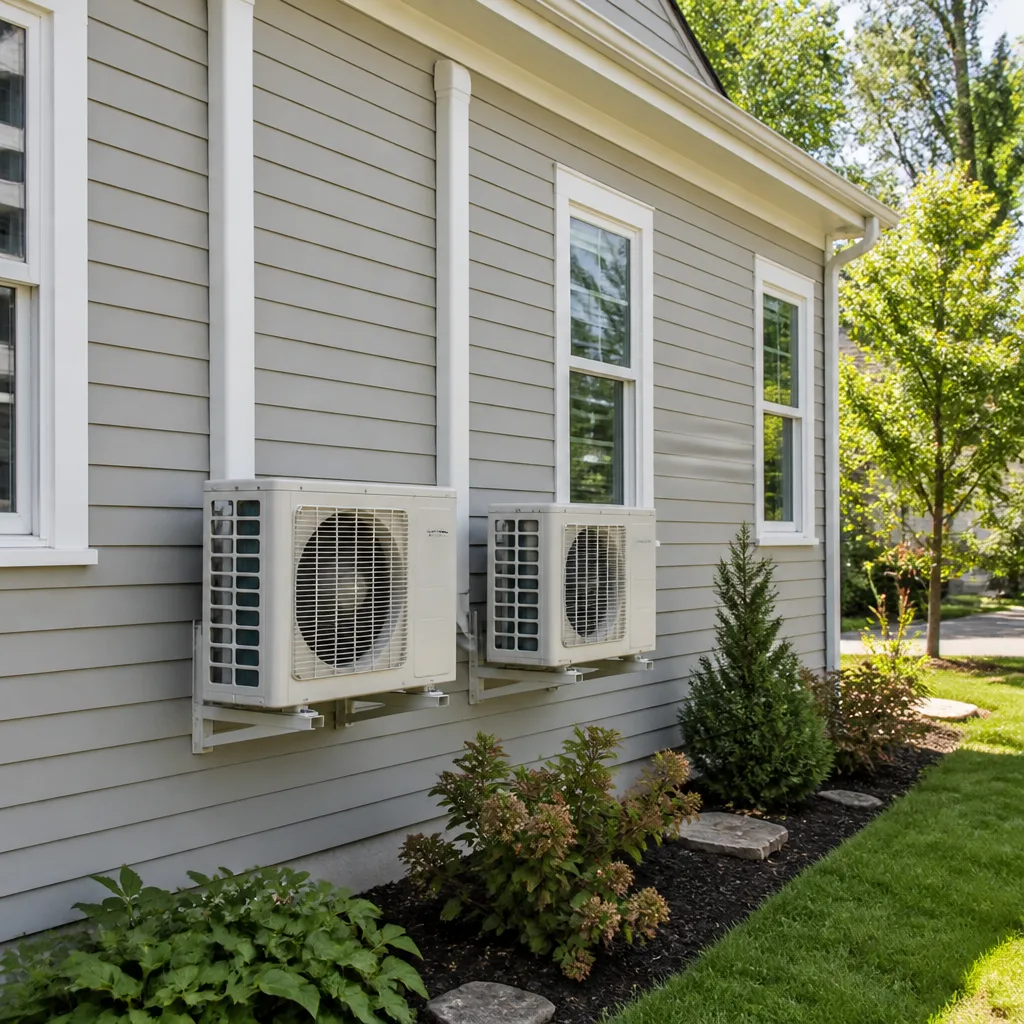 Ductless mini splits
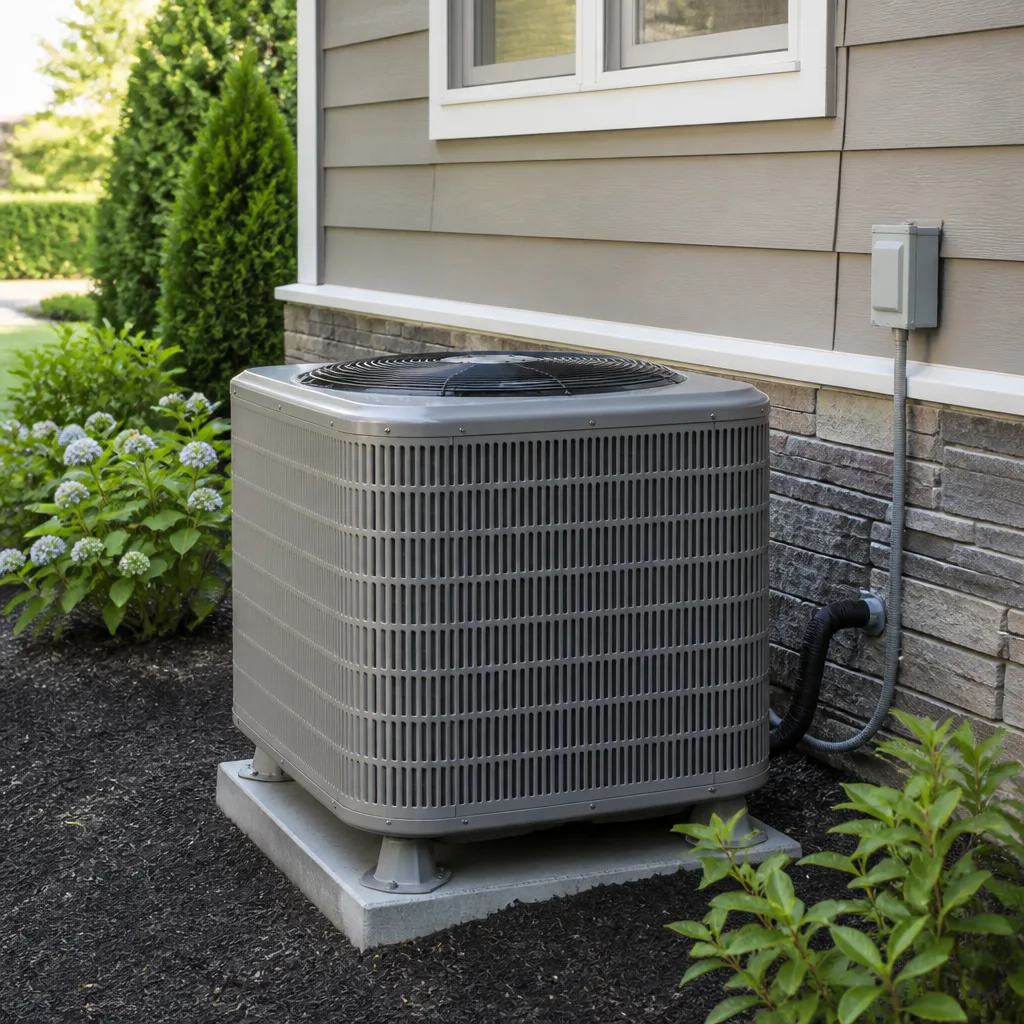 Carrier
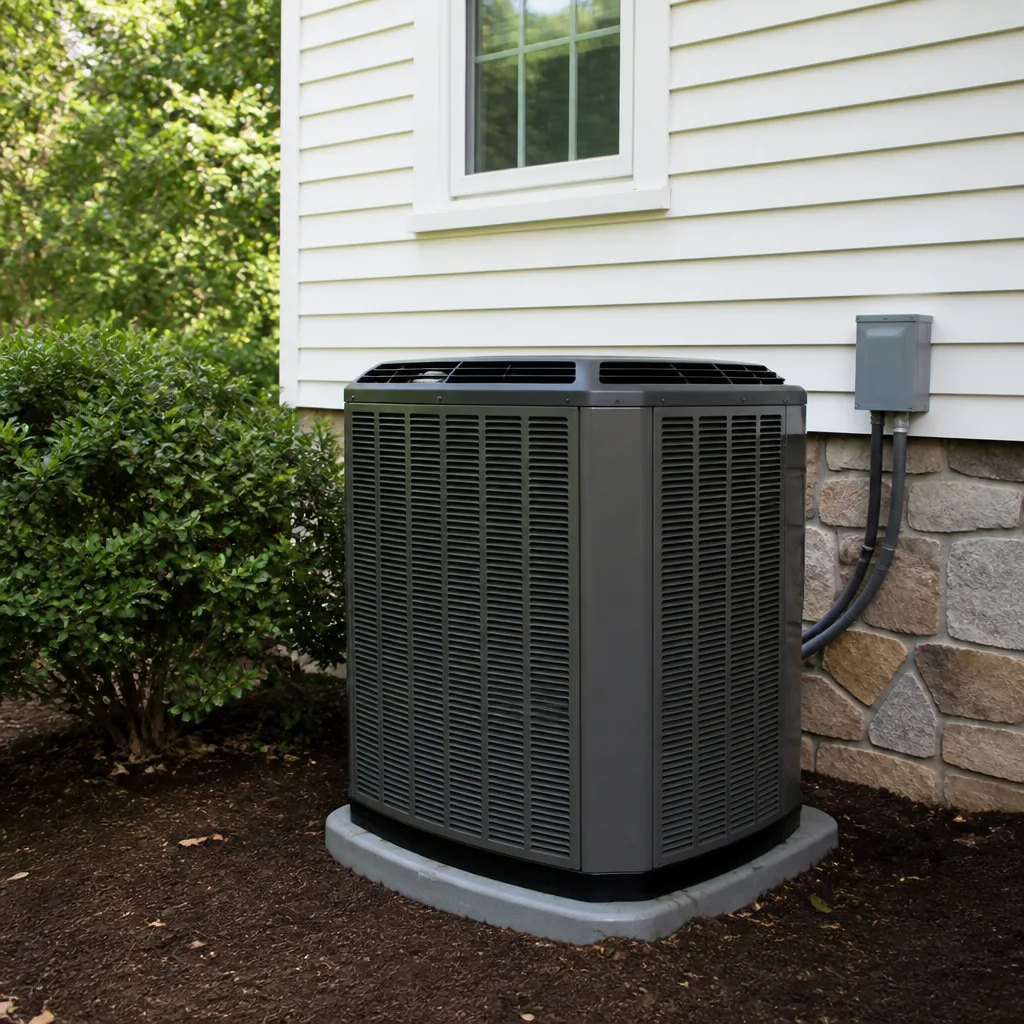 Trane
Trane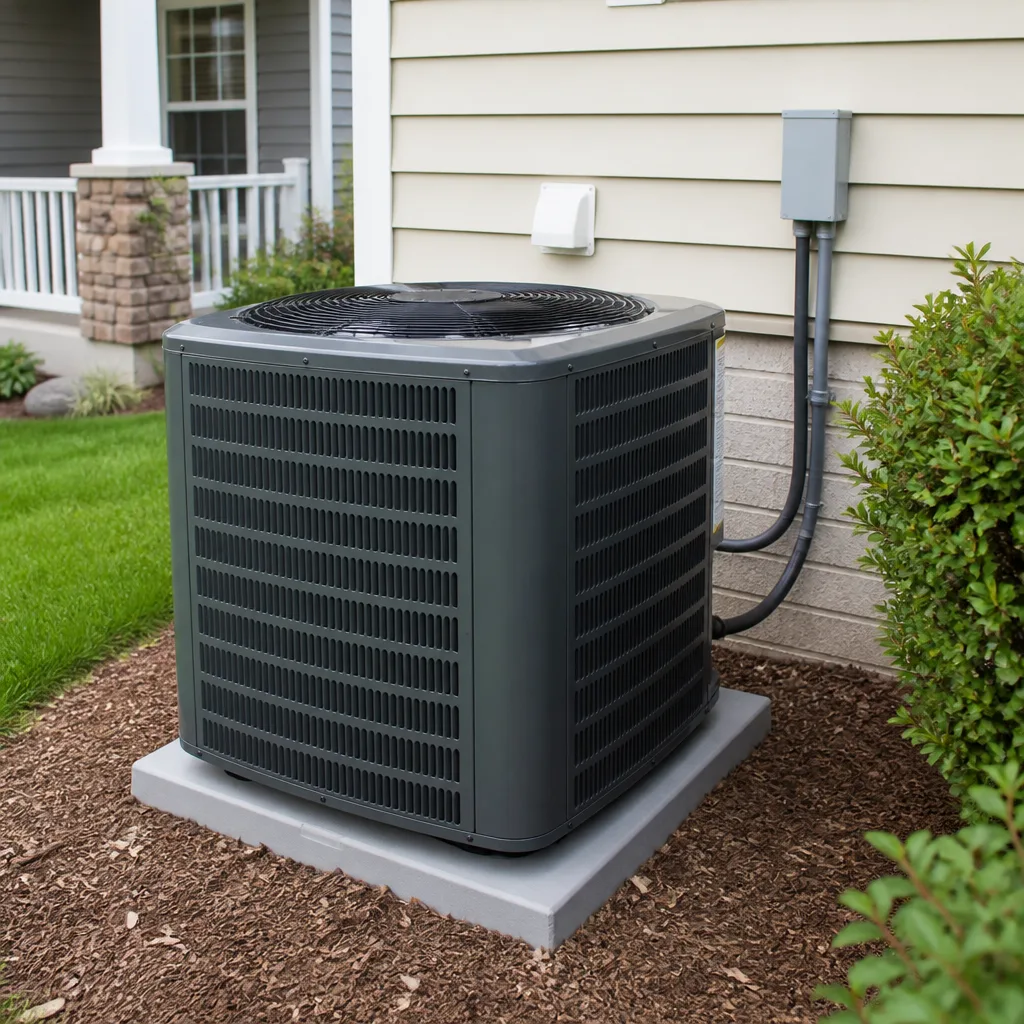 Goodman
Seasonal tune-up and full diagnostic on your Carrier, Trane, or Goodman system - readings shown to you before any repair is proposed
Diagnosis first, numbers second - you approve the repair price before a single part goes in.
Get your free estimateSeasonal HVAC Care for Henderson: Year-Round Homeowner’s Guide
Henderson HVAC companies book out 4 – 7 days for non-emergency calls every June and July. The homeowners who never wait out that queue aren’t lucky – they scheduled their maintenance in February, when a technician could show up the next morning. This guide lays out a Henderson-specific seasonal calendar based on actual Mojave Desert climate data, not a national template that treats Henderson like Portland or Phoenix. For a broader overview, see our Complete Guide to HVAC in Henderson. You’ll learn what to check after a haboob, when your heat pump’s auxiliary heat strips are actually pulling expensive electricity, why March is the cheapest month to catch a refrigerant leak, and how to set a thermostat schedule that reflects how Henderson actually heats and cools, not how a national average says it should.
Styles & brands we work with
Quick Answer
Seasonal HVAC care in Henderson means scheduling heat pump and air conditioner maintenance in February or March, checking heat strips in November before temperatures drop below 40°F, cleaning condenser fins after every dust storm between June and September, and replacing filters monthly during peak cooling season. Follow our AC Repair Maintenance Checklist for Henderson Homeowners for a complete task list. Homeowners who follow this calendar avoid the June-July scheduling backlog and catch most repair issues before they become emergency calls.
Table of Contents
- Henderson’s Real HVAC Calendar: Two Seasons, Two Windows
- Winter: Heat Pump Behavior in 40°F – 55°F Nights
- February – March: The Pre-Season Refrigerant Check
- Dust Storm (Haboob) Aftermath Protocol
- Setting a Henderson-Optimized Thermostat Schedule
- Filter Replacement Schedule for Henderson’s Air
- What Henderson Cooling Seasons Actually Cost
- Common Mistakes to Avoid
- When to Call a Professional
- Frequently Asked Questions
- The Bottom Line
Henderson’s Real HVAC Calendar: Two Seasons, Two Windows
Henderson’s climate doesn’t match the four-season model most HVAC advice assumes. The valley gets about 300 days of sunshine and less than 5 inches of annual rain. Summer cooling days run from late May through late September, with daily highs above 100°F from June through August. Winter heating demands are modest but real: overnight lows hit 40°F or below roughly 60 nights a year, mostly December through February.
That leaves two transition windows most homeowners waste: October – November and February – March. Here’s the honest calendar that matters for Henderson HVAC equipment:
- February 15 – March 31: The single most valuable window. Temperatures are mild enough that HVAC companies are not yet running emergency calls. This is when you schedule the pre-season air conditioning check and any repair that’s been pending since last summer. A technician can typically arrive next morning.
- April 15 – May 15: First heatwave prep. Filter replacement, thermostat battery check, and verifying the system reaches set temperature before the real demand starts.
- June 1 – September 15: Peak cooling season. Systems run 10 – 14 hours daily. Emergency repair calls spike. Wait times for non-emergency service stretch to 4 – 7 days at most Henderson companies.
- September 20 – October 31: Post-summer inspection. After 4 months of heavy runtime, components wear. This is the window to catch a failing capacitor or a refrigerant leak before it becomes a winter surprise.
- November 1 – February 15: Heating season. Heat pumps run in reverse. Auxiliary heat strips engage on nights below roughly 40°F. Solar load is low enough that most HVAC work is daytime and straightforward.
Every June we field calls from homeowners in Green Valley, Anthem, and Inspirada whose systems failed weeks earlier but who put off the repair. The pattern repeats every year. Meanwhile, the homeowners who called in February for a routine check spent 45 minutes with a technician and don’t think about their HVAC again until October.
Winter: Heat Pump Behavior in 40°F – 55°F Nights
Most Henderson homes use a heat pump, not a gas furnace, for winter heating. A heat pump in heating mode works by pulling heat from the outside air and transferring it indoors. Between 40°F and 55°F, most heat pumps operate efficiently on their own, delivering 300% efficiency or better. But when outdoor temperatures drop below about 40°F – a common overnight low in December and January in Henderson – the system’s auxiliary heat strips cycle on to supplement the heat pump.
Heat strips are simple electric resistance coils, essentially a giant space heater built into the air handler. They’re rated at 5 – 15 kilowatts. Running them for even a few hours on a cold night can add $60 – $180 to a monthly electricity bill, depending on NV Energy’s current rate and how often the strips engage. The key is knowing when they should engage and when they’re running wrong.
How to verify heat strips before the cold nights arrive:
- Set the thermostat to heat mode and 3 – 4°F above room temperature. The heat pump should start and produce warm air at the vents within 3 – 5 minutes.
- Listen for the heat strip relay. When strips engage, most thermostats display “AUX” or “Emergency Heat” on the screen. If you see that light during a 50°F day, something is wrong.
- Check vent temperature. Normal heat pump output at 50°F outdoor temperature is 85 – 95°F at the nearest vent. If it’s blowing 70°F air, the system may be stuck on strips or low on refrigerant.
- Check the outdoor unit. In heating mode, the outdoor coil gets cold and may frost lightly. If it’s solid ice in 45°F weather, the defrost cycle is failing and needs attention before winter deepens.
Henderson winters are mild enough that most heat pumps running correctly will handle 80 – 90% of heating hours without heat strip assistance. When we inspect homes in MacDonald Ranch or Seven Hills in November, we frequently find strips misconfigured to engage at 55°F or even 60°F – which means homeowners are paying electric resistance prices for mild-weather heating that the heat pump should be handling at one-third the cost. A thermostat adjustment of the heat strip lockout temperature from 55°F down to 35°F saves most families $200 – $400 per winter in Henderson’s short but real heating season.
February – March: The Pre-Season Refrigerant Check
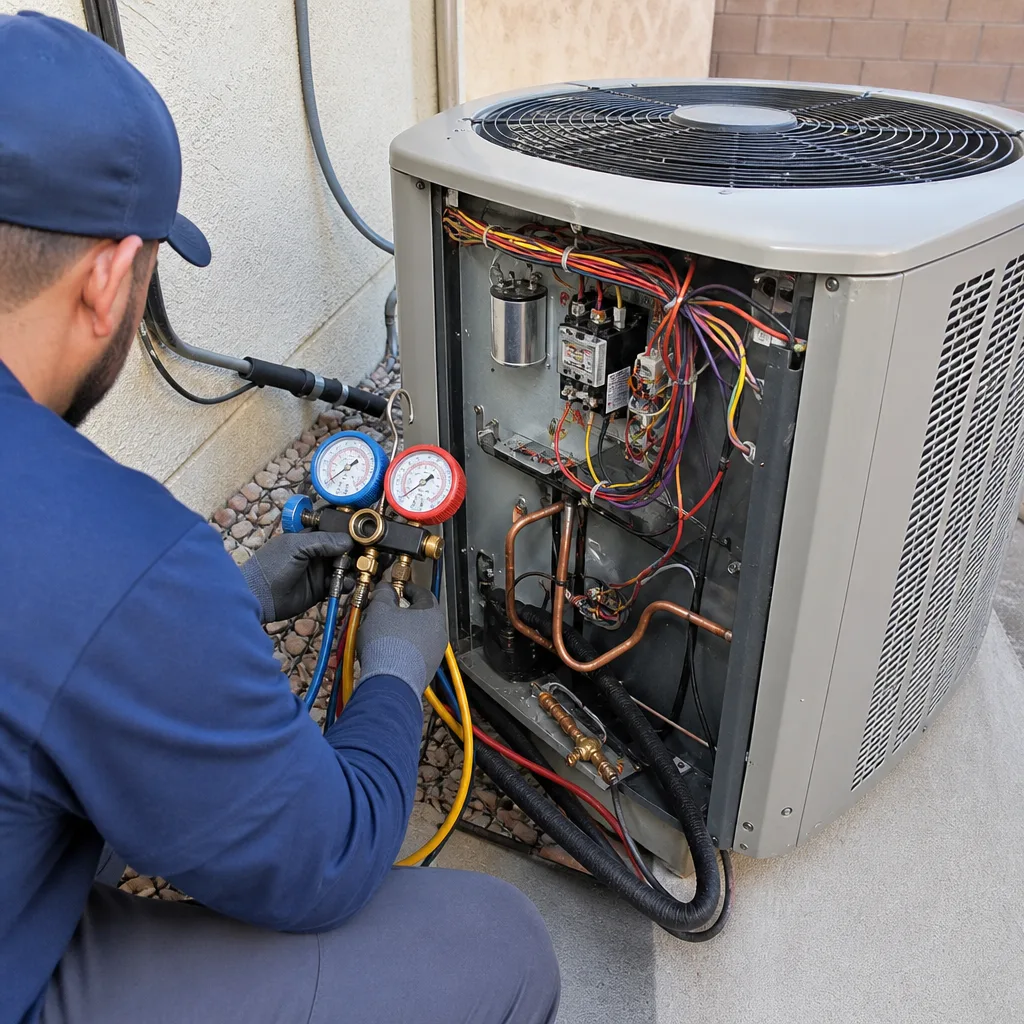
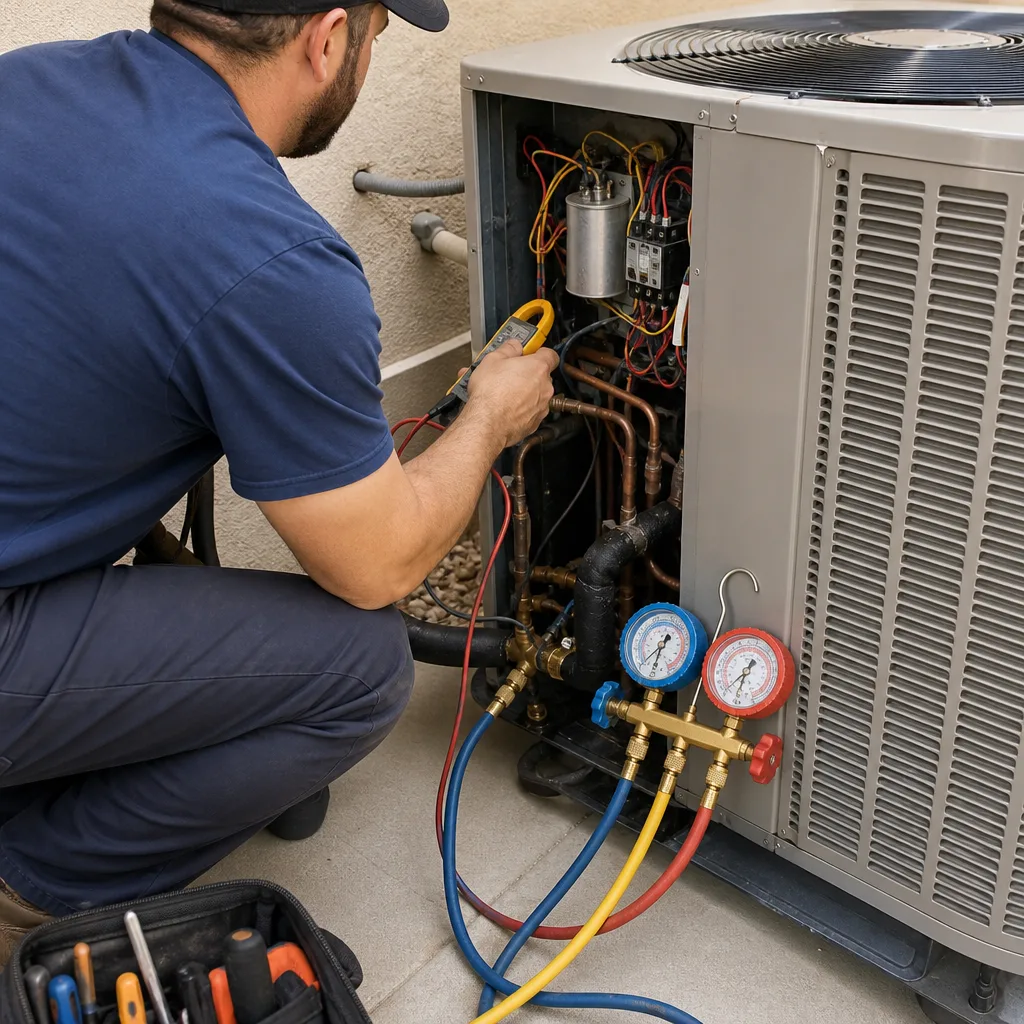
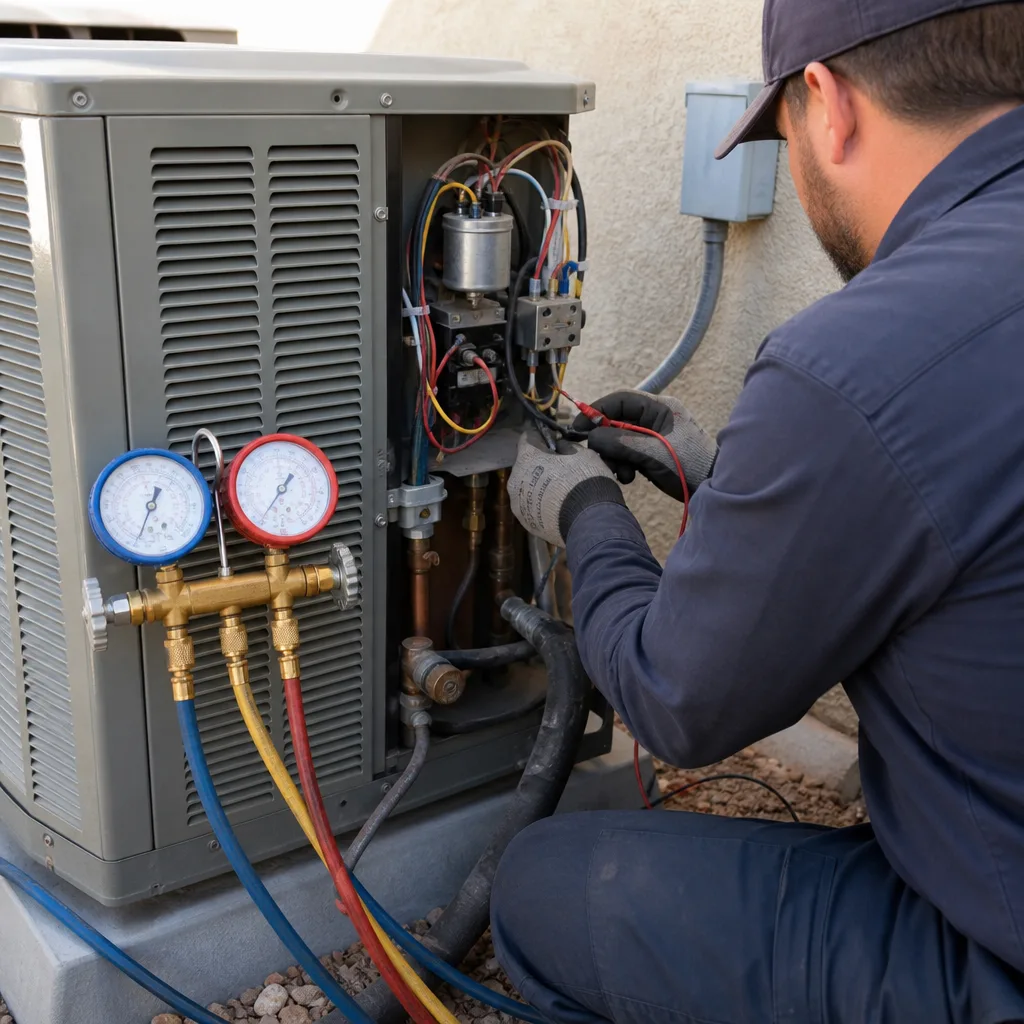
March is the ideal month to check system refrigerant charge in Henderson. Here’s the technical reason: refrigerant pressure varies with outdoor ambient temperature. An HVAC technician charging a system needs a stable, known ambient temperature to compare against the manufacturer’s pressure-temperature chart. At 65°F ambient – typical in March in Henderson – the pressure readings are clean and the calculation is straightforward.
By contrast, a July service call in Henderson means diagnosing a system at 108°F outdoor temperature. High ambient drives condenser pressure up and makes it harder to distinguish a slightly low charge from a normal charge on a hot day. The technician’s gauges read differently. Diagnosis takes longer, is less certain, and the technician is working in 110°F heat with a service queue of 12 calls behind them. Catching that same low charge in March takes 20 minutes.
A system that’s 10 – 15% low on refrigerant – the typical range for a small, slow leak – won’t fail outright in March. It’ll cool adequately in mild weather and only show symptoms when the real heat arrives in June. By then, every Henderson HVAC company is running at capacity and you’re waiting 5 days for a visit while your system loses more charge. Pre-season checks catch the leak early, when scheduling is wide open and ambient conditions support an exact diagnosis.
In our experience across Henderson neighborhoods – from Anthem Heights to Green Valley Ranch – roughly one in five systems we inspect in March has a refrigerant level at least 8% below the manufacturer’s specification. Homeowners rarely notice anything wrong. The system still cools. But that deficit compounds across an entire summer of 14-hour daily runtimes and shows up as both higher electricity consumption and accelerated compressor wear.
Dust Storm (Haboob) Aftermath Protocol
Henderson sits in the path of Mojave dust storms – haboobs – that roll through the Las Vegas Valley primarily between June and September. These events carry fine silt, sand, and debris that clog condenser coils, reduce airflow through outdoor units, and overload air filters within hours. A single strong haboob can deposit enough dust on a condenser coil to raise head pressure 10 – 20%, which translates directly to higher energy cost and reduced cooling capacity.
Here’s the post-storm protocol every Henderson homeowner should run within 24 – 48 hours after a significant dust event:
- Check the air filter. Henderson’s standard 1-inch filters load dramatically faster during dust storm season. A filter that normally lasts 60 days in February might be visibly brown after a single June haboob. Replace it if you can’t see light through the filter media.
- Inspect the outdoor condenser fins. Walk around the outdoor unit. If you see a visible coating of dust or sand caked between the aluminum fins, the unit is working harder than it should. Do not attempt to clean the fins with a pressure washer – high-pressure water bends fins and can drive water into electrical compartments. A garden hose at low pressure, spraying from the inside outward, removes loose surface dust safely.
- Check the disconnect box. The outdoor electrical disconnect box – the small metal box mounted on the wall near the condenser – has small vent holes. Haboob dust gets inside and can foul the contacts. If the box is heavily caked, schedule a cleaning. Do not open it yourself; this is line-voltage electrical equipment and the covers are not meant to be removed by homeowners.
- Listen for changes in noise. After a dust event, start the system and stand near the outdoor unit. Grit can get into the fan motor bearings. A grinding or rumbling sound that wasn’t there before the storm is a bearing warning sign.
- Check the indoor registers for dust redeposition. If you notice a fine dust layer forming at supply vents within days of a haboob, your filter is either the wrong size for the slot or not seated properly. Air is bypassing the filter entirely.
Henderson’s haboob season peaks in the same months as peak cooling demand. That’s not a coincidence – the same high-pressure systems that drive 110°F days also generate the outflow winds that lift desert dust. Homeowners in areas near the Pittman Wash and the southern edge of the valley near Anthem see the worst of it because those locations are downwind of open desert. We recommend checking the filter after every storm during June – September, regardless of the replacement date on your maintenance schedule.
Setting a Henderson-Optimized Thermostat Schedule
Most thermostat guidance published for the national market assumes a climate with real humidity and overnight lows that allow natural cooling. Henderson gets neither. From late May through mid-September, overnight lows frequently stay above 85°F. There is no meaningful “open the windows at night” cooling period in a Henderson summer, and setting the thermostat back 10 degrees during the day – standard national advice – creates a recovery load that eats most of the savings when you get home.
Based on Henderson’s actual cooling degree-days, the most cost-effective schedule for a typical 2,500 sq ft single-story home looks like this:
- 6:00 AM – 9:00 AM: Set point 76°F. The house has recovered overnight and the system runs lightly as outdoor temperature climbs.
- 9:00 AM – 4:00 PM: Set point 78 – 79°F. This is the key Henderson-specific setting. If you work away from home, don’t set the thermostat to 85°F or turn the system off. The thermal mass of attics, walls, and concrete slabs means a 5 – 7°F daytime setback is the sweet spot for savings without a brutal 4-hour recovery run at 5 PM.
- 4:00 PM – 10:00 PM: Set point 75 – 76°F. The system runs continuously during peak demand hours. This is when NV Energy’s time-of-use rates are highest, so every degree you can tolerate matters.
- 10:00 PM – 6:00 AM: Set point 74°F. Overnight cooling provides sleep comfort. The system runs at lower capacity, not full-blast, because outdoor temperature drops into the 80s.
If you work from home in Henderson – and a significant share of residents now do – the 9 AM – 4 PM setback doesn’t apply the same way. Set a flat 76°F for occupied daytime hours and accept the cost. The alternative – bouncing the set point up and down during the day – causes more compressor cycling and essentially no savings.
The most common thermostat mistake we find in Henderson homes: setting the thermostat to 68°F on a 110°F day “to cool down faster.” Air conditioners don’t work that way. The system removes heat at a fixed rate regardless of what number you set. Setting 68°F just makes the system run longer at the same output, and it may never reach that temperature in peak afternoons. The right approach is to set the temperature you actually want and let the system run consistently.
Henderson’s NV Energy rates also factor in. The residential time-of-use plan charges roughly double during the 4 PM – 9 PM weekday window in summer months. Every degree of setback between 4 PM and 9 PM saves real money; every degree of recovery demand during those hours costs more. The schedule above respects that peak window by holding a moderate set point through the evening rather than dropping the temperature the moment you walk in the door.
Filter Replacement Schedule for Henderson’s Air
Henderson’s air quality profile is unlike anything assumed in generic HVAC advice. Las Vegas Valley, including Henderson zip codes 89002 through 89074, regularly ranks among the worst U.S. metros for particulate matter during summer months. The sources are dust storms, construction activity, vehicle emissions trapped by the valley’s basin geography, and wildfire smoke from California and Arizona drifting east.
Practical filter schedule for Henderson homes:
- Standard 1-inch fiberglass or pleated filters (MERV 4 – 8): Every 30 days during June – September. Every 60 – 90 days during the rest of the year.
- 4-inch media filters (MERV 11 – 13): Every 2 – 3 months during summer, every 4 – 6 months in winter.
- Homes within 1/4 mile of active construction: Halve those intervals. Henderson has major development zones in Cadence, Inspirada, and West Henderson where new-home construction runs year-round. Dust loading from grading and framing is continuous.
- Homes with pets: Assume dirtier-than-baseline and check monthly regardless of season.
The single biggest mistake we see is homeowners with 4-inch filters who were told “good for a year” and never check them. That claim assumes a clean-air climate. In Henderson’s summer, a 4-inch filter on a home near construction can load out in 8 weeks. A loaded filter reduces airflow across the evaporator coil, which causes the coil to run colder, which causes ice formation, which reduces airflow further – a feedback loop that ends in a frozen system and no cooling at all.
Filter choice matters for system health more than indoor air quality claims. A too-restrictive MERV 13 filter on a system designed for MERV 8 increases static pressure and reduces total airflow. If you’re upgrading filter efficiency, verify the system’s static pressure rating first. A technician can measure this in minutes with a manometer.
What Henderson Cooling Seasons Actually Cost
Henderson homeowners on NV Energy’s residential time-of-use plan can expect summer electricity bills of $250 – $500 per month for homes in the 1,800 – 3,500 sq ft range, depending on insulation quality, window orientation, and thermostat habits. Winter bills on a heat pump-only home typically run $120 – $220. Homes with gas heat see winter gas bills in the $60 – $150 range from Southwest Gas plus reduced electric demand.
The dominant variable isn’t the age of the equipment – it’s runtime. Two homes in the same Green Valley neighborhood with identical square footage can differ by 40% in summer cooling cost based on thermostat set points, shade coverage, and whether the system was maintained. A refrigerant charge 10% low pushes runtime 15 – 25% higher to hit the same indoor temperature. A condenser coil loaded with haboob dust pushes it another 10 – 15%. Those are compounding inefficiencies that add hundreds of dollars per season.
For context on what maintenance costs versus what it saves:
- Pre-season AC check (February – March): Typically $89 – $149 in Henderson. Most companies include coil inspection, capacitor test, refrigerant level check, and filter inspection.
- Refrigerant recharge, if low: $200 – $500 depending on refrigerant type (R-410A vs. older R-22). R-22 systems are increasingly rare but more expensive per pound.
- Condenser fin cleaning after heavy haboob season: $75 – $150 as a standalone service, often bundled with the pre-season check.
- Heat strip verification and thermostat recalibration: $75 – $125, typically included with a full heating season check.
Compare a $149 pre-season check against a $400 – $800 emergency repair call in July, plus 5 days without cooling in 108°F heat. The arithmetic is clear. See our DIY vs Professional HVAC: The Henderson Homeowner’s Decision Guide to understand when to call a pro. Henderson homeowners who maintain on the front end consistently pay less per year in total HVAC cost – even accounting for the maintenance visits themselves – than homeowners who run systems to failure and pay emergency rates.
Common Mistakes to Avoid
- Turning the system off during summer days and expecting quick recovery. In Henderson’s 110°F afternoons, an unconditioned house gains heat into the attic, walls, and slab. Recovery can take 4 – 6 hours of continuous runtime and often costs more than a modest setback would have.
- Ignoring the “AUX” light on the thermostat in winter. When the auxiliary heat strips run, electricity consumption roughly triples. If that light is on during a 50°F day, the heat pump isn’t doing its job and a service call is warranted.
- Using a pressure washer on condenser fins. The fins are thin aluminum, less than 0.006 inches thick. High-pressure water folds them flat in seconds. Bent fins permanently reduce heat transfer.
- Waiting until November to think about heat strips. Henderson’s first sub-40°F nights arrive in late November or early December. Testing heat strips then means competing with every other homeowner who just discovered the problem.
- Skipping filter checks during haboob season because “it’s not due yet.” Henderson’s dust loading doesn’t follow a calendar. After any visibly dusty storm event, check the filter. A quick look takes 30 seconds and can prevent a frozen coil.
- Setting the thermostat to an extreme temperature to “cool faster.” The compressor removes heat at the same rate regardless of set point. A 68°F setting on a 110°F day just runs the system longer at the same output.
- Assuming a new system means no maintenance for years. New equipment fails from installation errors, not age. A capacitor can fail on a two-year-old system just as easily as a ten-year-old one. Henderson’s heat and dust load accelerates wear on all components.
When to Call a Professional
Some Henderson HVAC issues you can see and some you can’t. What you can see: a loaded filter, a dust-caked condenser, frost on the outdoor coil in summer, water pooling under the indoor unit. What you can’t: refrigerant level, capacitor health, electrical connection integrity, heat strip relay function, and static pressure. The equipment in an HVAC system lives in your attic or on your rooftop or beside your house, running unattended for thousands of hours a year. When it misbehaves, the cheapest fix is almost always the early one.
If your system is short-cycling (turning on and off every few minutes), making unusual noise, blowing warm air in cool mode, showing the AUX light during mild weather, or leaking water, schedule a diagnostic. Dalton Heating & Air Henderson offers free estimates in Henderson – call (775) 593-7060. We put the price in writing before any work starts, and the repair comes with a written full-year guarantee.
Frequently Asked Questions
Twice a year: once in February or March before cooling season, once in September or October before heating season. Henderson’s extreme summer runtime and dust loading make semi-annual checks the minimum for equipment reliability, not a luxury. The February – March visit is the more important of the two because it catches issues before the June – July peak when scheduling is hardest and repair wait times stretch longest.
March, specifically the first half. Outdoor ambient temperature averages 60 – 70°F, which is ideal for accurate refrigerant pressure readings. Henderson HVAC companies are not yet in summer emergency mode, so scheduling is wide open and next-day appointments are realistic. By May, the same company may be booking 3 – 5 days out, and by June the wait can extend to a week.
No. Henderson winter overnight lows in the 30s and 40s are cold enough that a turned-off heat pump means waking to a 55°F house and paying electric resistance rates for the entire morning recovery. A properly functioning heat pump running at 68°F during winter nights costs less than turning it off and recovering with heat strips in the morning.
Most companies in Henderson charge $89 – $149 for a cooling season check that includes coil inspection, capacitor test, refrigerant level verification, and filter inspection. That’s a fraction of what a single July emergency repair costs. Dalton Heating & Air Henderson includes written pricing before any work starts, so the check price is the actual price you pay.
When outdoor temperature drops below about 40°F, the heat pump’s heating capacity falls and the auxiliary heat strips engage to supplement. Brief AUX light during sub-40°F mornings is normal. If AUX appears at 50°F or above, the system is either low on refrigerant, misconfigured, or the thermostat’s lockout temperature is set too high. That’s a service call.
They reduce efficiency more than they cause outright damage in most cases. Dust coatings on condenser coils raise head pressure and reduce heat transfer. Grit in the condenser fan motor bearings reduces lifespan. Filters load out in days rather than weeks. The cumulative effect across an entire haboob season, if never cleaned, can shorten compressor life by a measurable margin and add real cost to every summer electricity bill.
The Bottom Line
Henderson’s HVAC calendar runs on two intense seasons and two windows that matter. Cooling from May through September, heating from December through February, and preparation in February – March and September – October. The homeowners who stay comfortable all year without emergency calls are the ones who book maintenance in late winter when the weather is mild and the schedule is open. Browse more guides & resources to keep your system running smoothly year-round. They check filters after every haboob. They verify heat strips in November before the first cold snap. They catch refrigerant issues in March when diagnosis is cheap and fast.
None of this is expensive. None of it requires special skills. It requires doing the right task in the right month. That’s the whole strategy. If you’re in Henderson and want a starting point, call (775) 593-7060 for a free estimate. We’ll put the price in writing before any work starts, and every repair carries a written full-year guarantee. That’s how we’ve operated since 2003, and it’s not changing.
Written by Marco Benitez, Owner at Dalton Heating & Air Henderson, serving Henderson since 2003.
See the difference
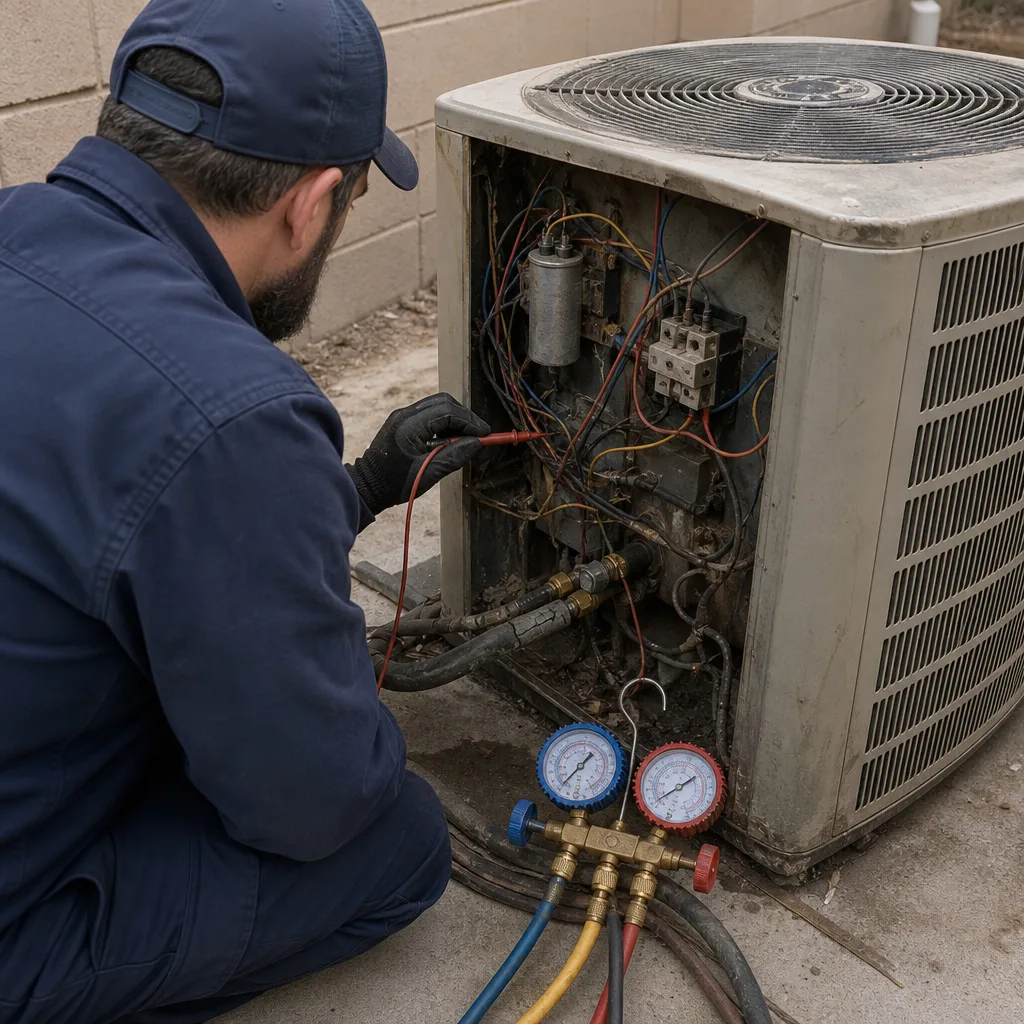 Before
 After
After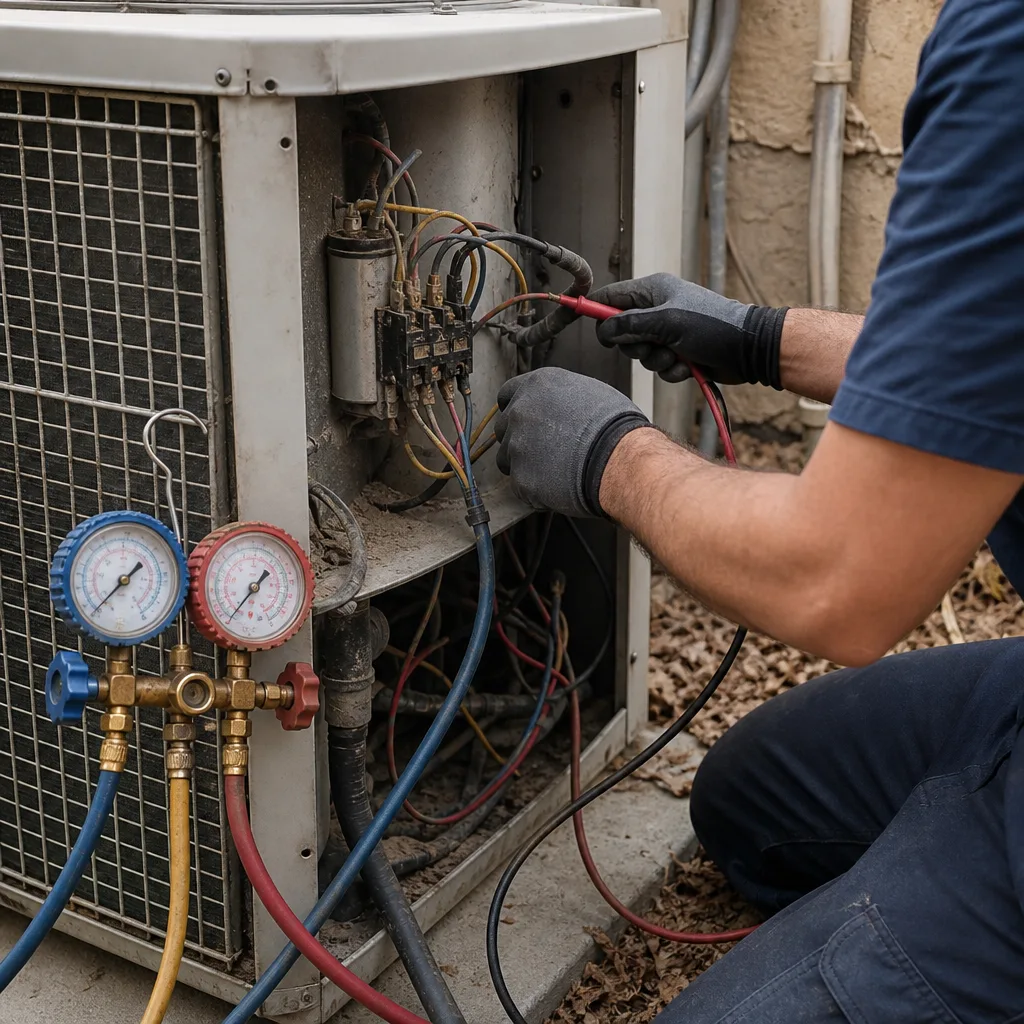 Before
 After
After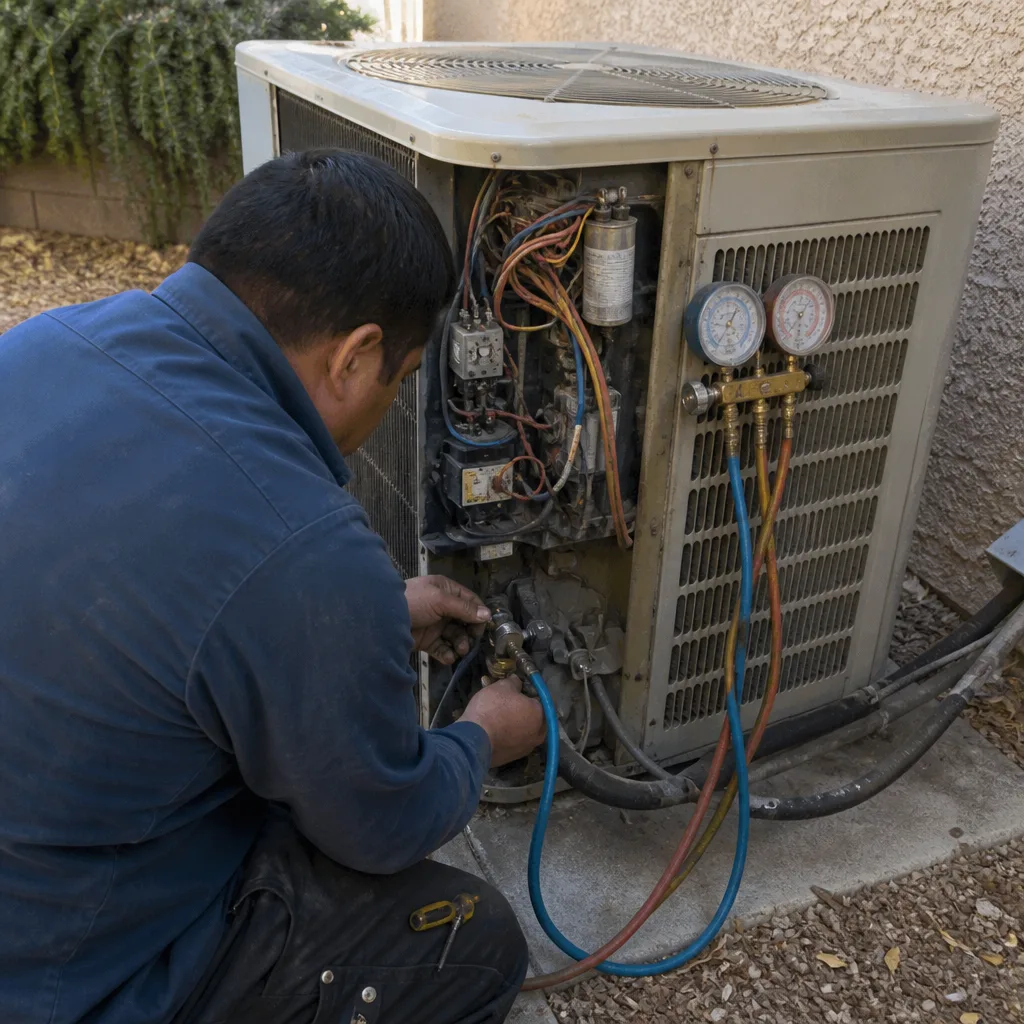 Before
 After
After