
Last updated October 16, 2026
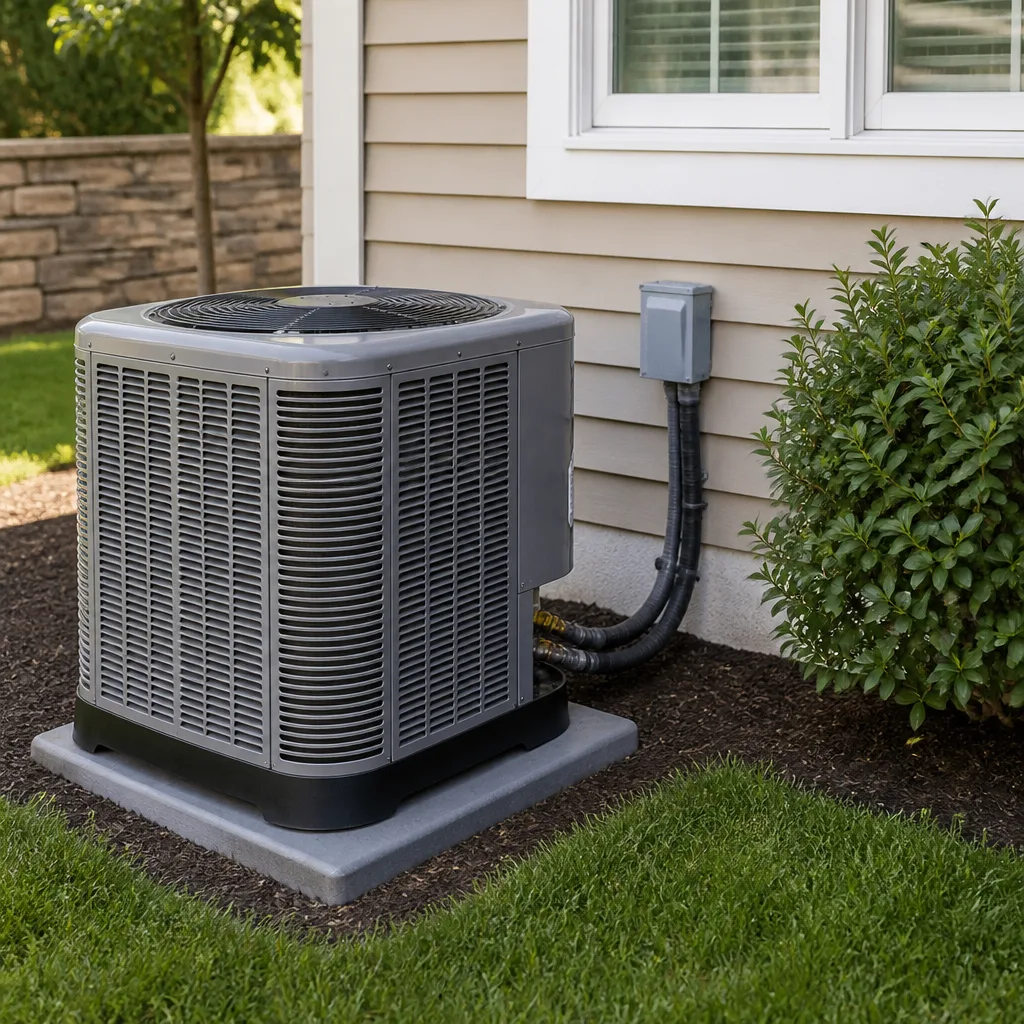 AC repair
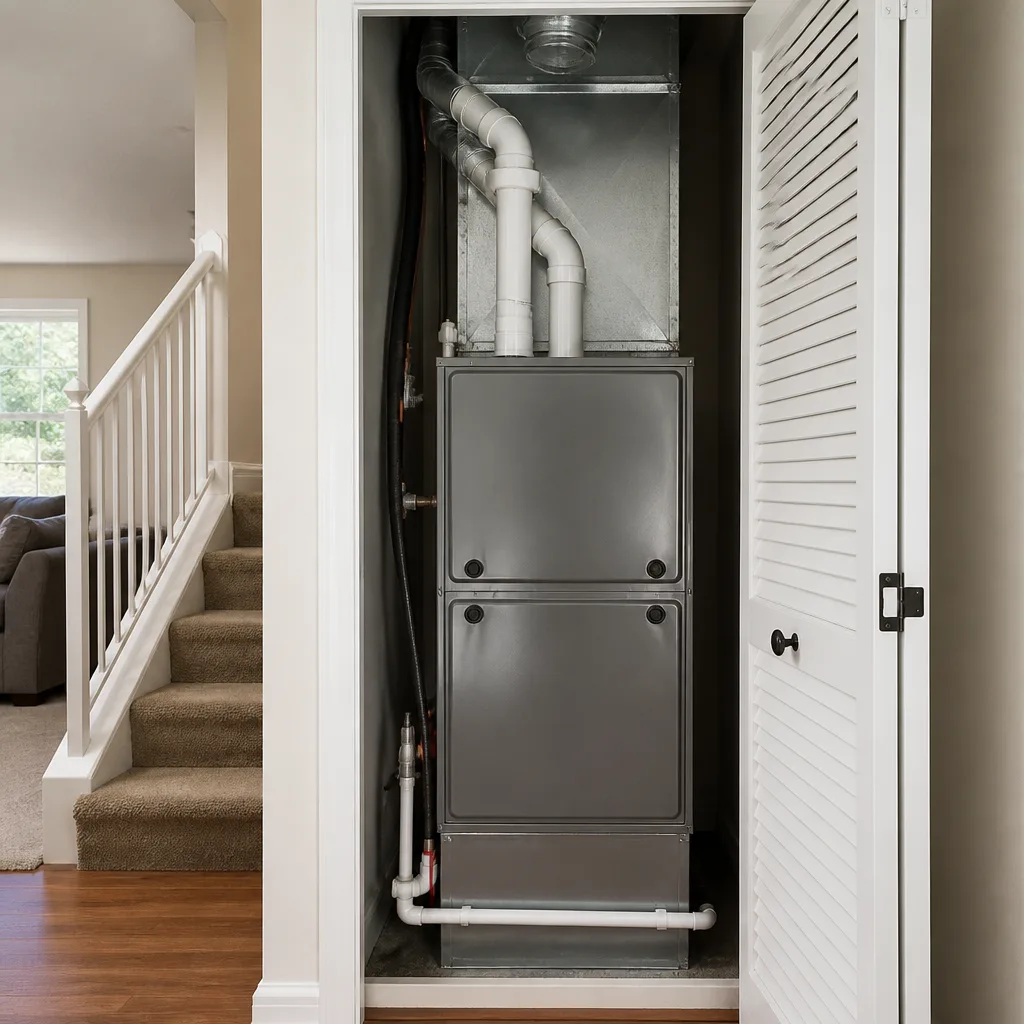 Furnace & heating
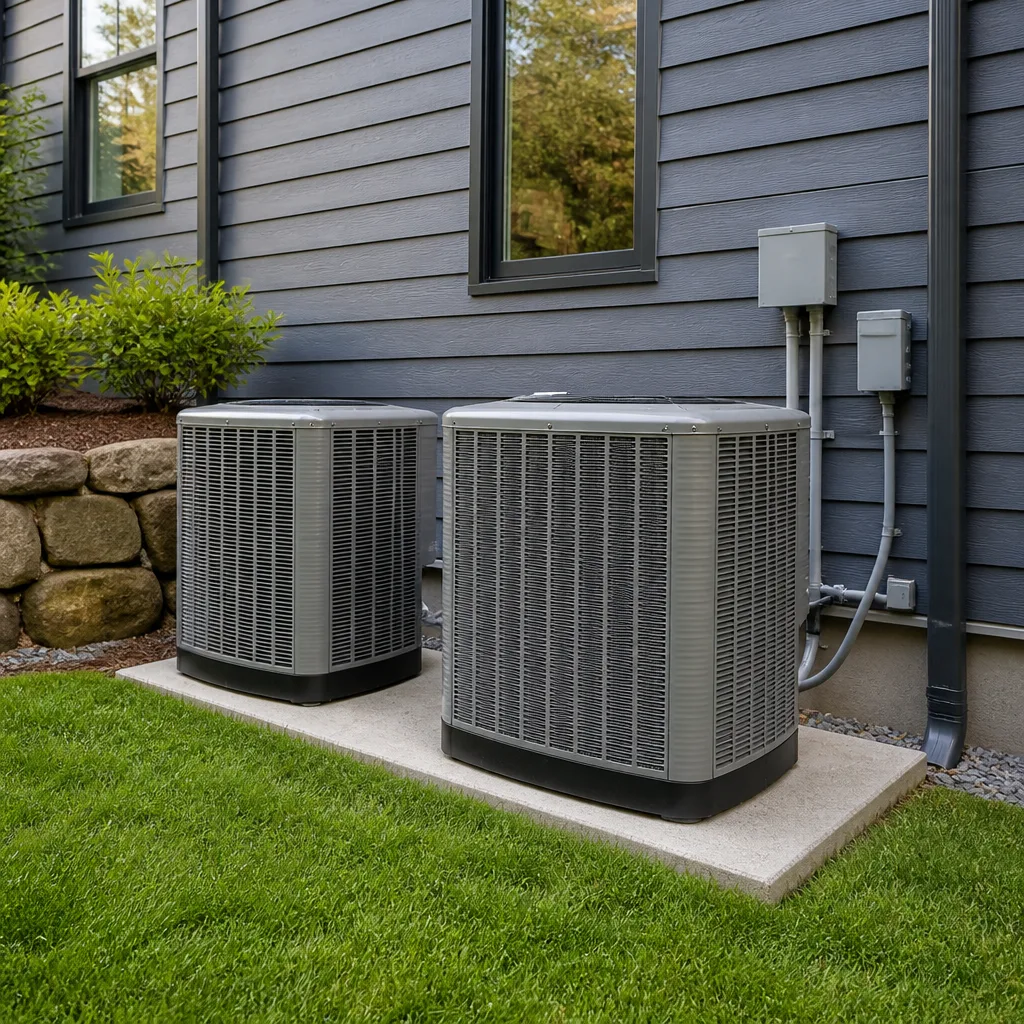 Heat pumps
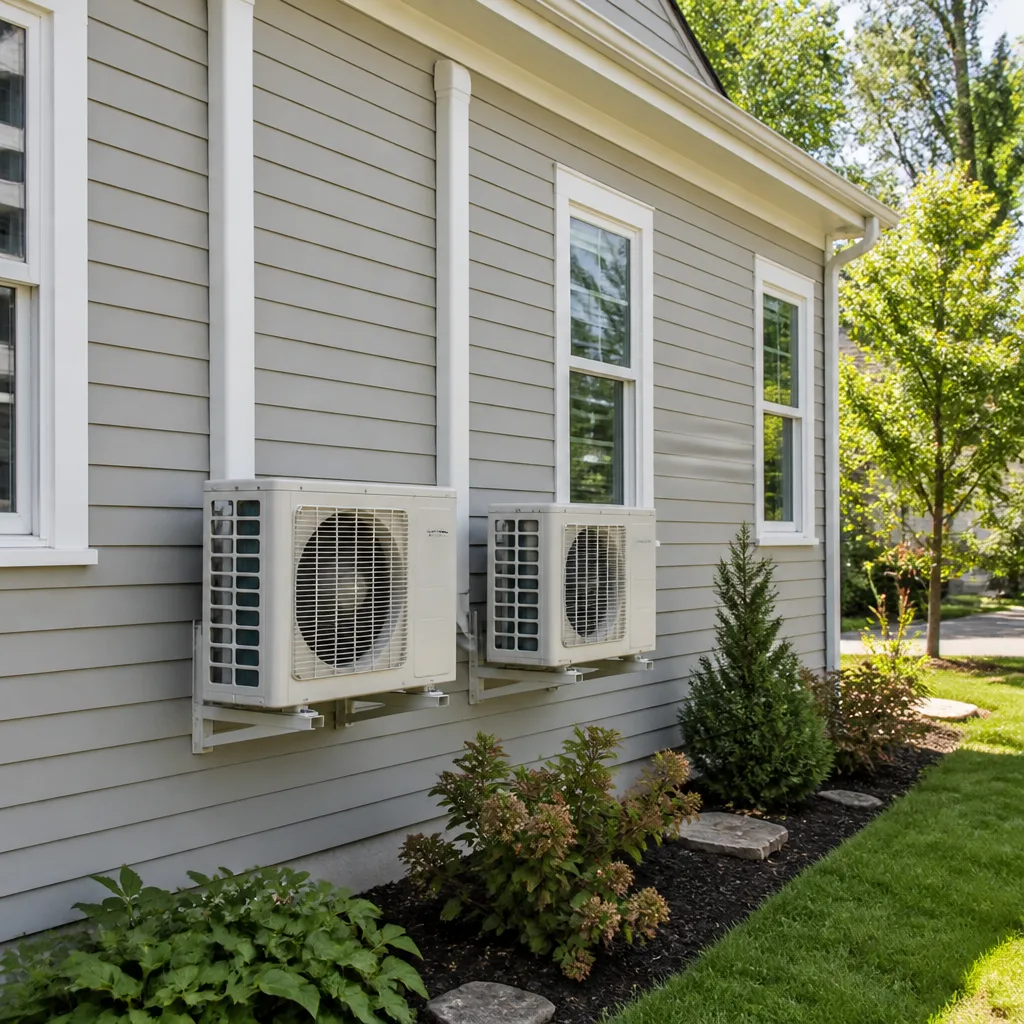 Ductless mini splits
 Carrier
 Trane
Trane Goodman
Seasonal tune-up and full diagnostic on your Carrier, Trane, or Goodman system - readings shown to you before any repair is proposed
Diagnosis first, numbers second - you approve the repair price before a single part goes in.
Get your free estimateHVAC Warning Signs: A Henderson Homeowner’s Reference Guide
Here’s a number most Henderson homeowners never hear: a failing capacitor costs about $85 to replace, while a failing compressor runs $1,400 to $2,800. Both produce the same homeowner-level symptom, a system that runs but doesn’t cool. The difference is knowing which warning signs point to which component. This guide maps the failure signatures we see most often in Henderson’s high-run-hour climate directly to the parts responsible, then gives you a triage framework: fix this week, fix this month, or watch and wait. For a broader overview, see The Complete Guide to HVAC in Henderson.
Quick Answer
The HVAC warning signs Henderson homeowners should never ignore are: short cycling (the system turns on and off every few minutes), ice forming on the copper line set or indoor coil, warm air blowing from the vents, a sudden unexplained spike in your NV Energy bill, and specific sounds like a hard-start buzz or a refrigerant hiss. Most of these point to a specific component, and catching the $85 fix before it becomes the $1,400 fix is the entire game.
Styles & brands we work with
Table of Contents
- Symptom-to-Component Diagnosis Table
- Short Cycling: What It Means and Why It’s Urgent
- Ice on the Line Set: Refrigerant Leak vs. Dirty Coil
- Three Sounds Every Henderson Homeowner Should Be Able to Name
- The Utility Bill Baseline Method
- Monsoon-Season Symptoms That Aren’t Actually Failures
- Uneven Cooling and Airflow Problems by Henderson Neighborhood
- Common Mistakes to Avoid
- When to Call a Professional
- Frequently Asked Questions
- The Bottom Line
Symptom-to-Component Diagnosis Table
Most online warning-sign lists stop at “strange noises and high bills.” That’s not useful. What you need is a map from what you observe to what’s actually failing. Here’s the table we use when a Henderson homeowner calls and describes symptoms over the phone. It’s organized by what you see, hear, or feel, followed by the component most likely responsible in Henderson’s climate, where systems run hard from May through September.
| Symptom You Observe | Most Likely Component | Typical Repair Cost | Urgency Level |
|---|---|---|---|
| System turns on and off every 3-5 minutes | Capacitor or thermostat | $85-$250 | Fix this week |
| System runs constantly but home stays warm | Refrigerant charge (leak) or compressor | $200-$2,800 depending on cause | Fix this week |
| Ice on the copper line set outside | Low refrigerant, dirty coil, or restricted airflow | $150-$450 | Fix this week |
| Loud buzzing or clicking at startup | Compressor hard start or contactor | $120-$350 | Fix this week |
| Hissing sound near the indoor air handler | Refrigerant leak at the evaporator coil | $400-$1,200 | Fix this month (after diagnosis) |
| One room always 5+ degrees warmer | Duct leakage or damper position | $150-$600 | Fix this month |
| Water pooling around the indoor unit | Clogged condensate drain line | $100-$200 | Fix this week |
| Burning smell on first startup in fall | Dust on heat exchanger (normal) | $0 | Watch (dissipates in 20-30 minutes) |
| Persistent musty or acrid smell | Mold on coil, or electrical overheating | $150-$500 | Fix this week |
Most Henderson homes have split systems: a condenser outside and an air handler or furnace inside, often in the garage or attic. The symptoms above map to components on one side or the other. Knowing which side narrows the diagnosis fast, and that’s the first thing any technician will ask when you call Dalton Heating & Air Henderson home office.
Short Cycling: What It Means and Why It’s Urgent
Short cycling is the term for a system that starts, runs for three to five minutes, shuts off, then starts again a few minutes later. It’s one of the most common complaints we hear from homeowners in Green Valley Ranch and Anthem, where homes built in the early 2000s are now hitting the age where capacitors degrade.
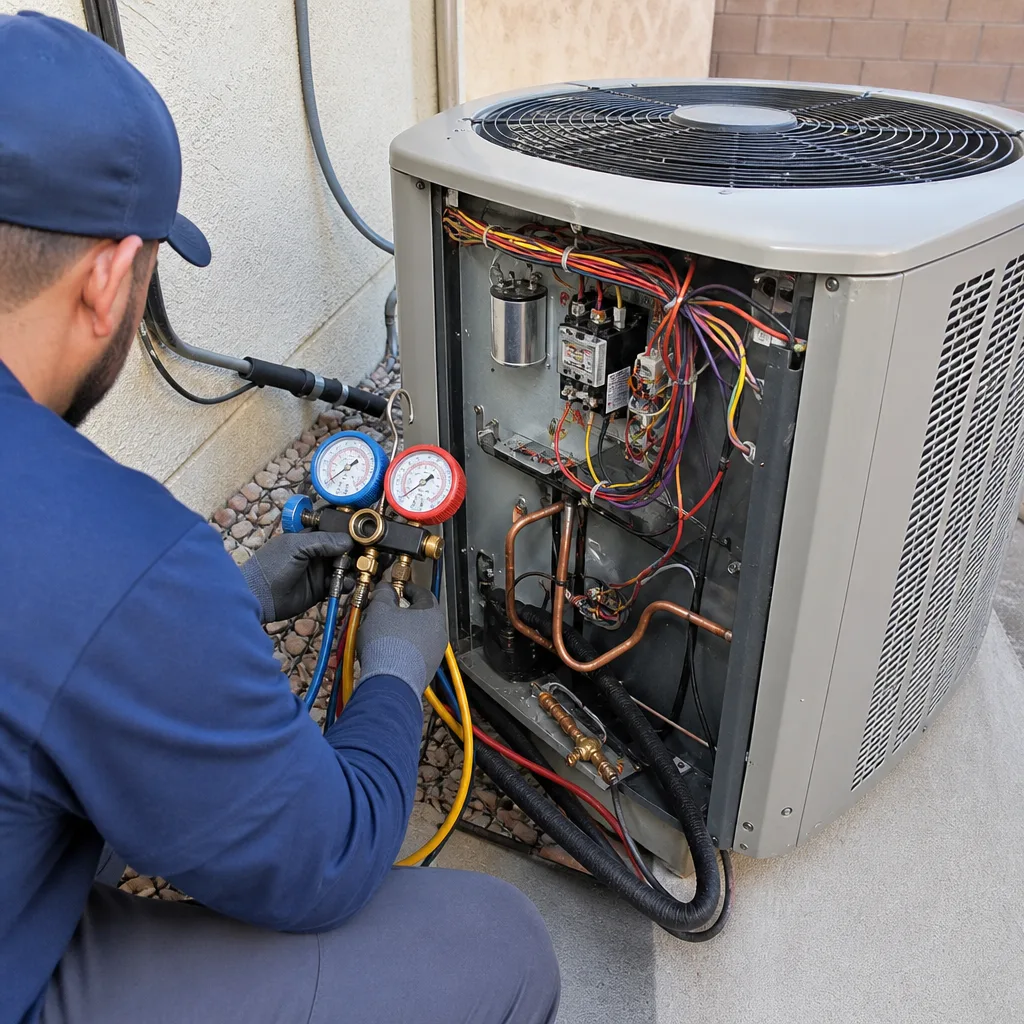
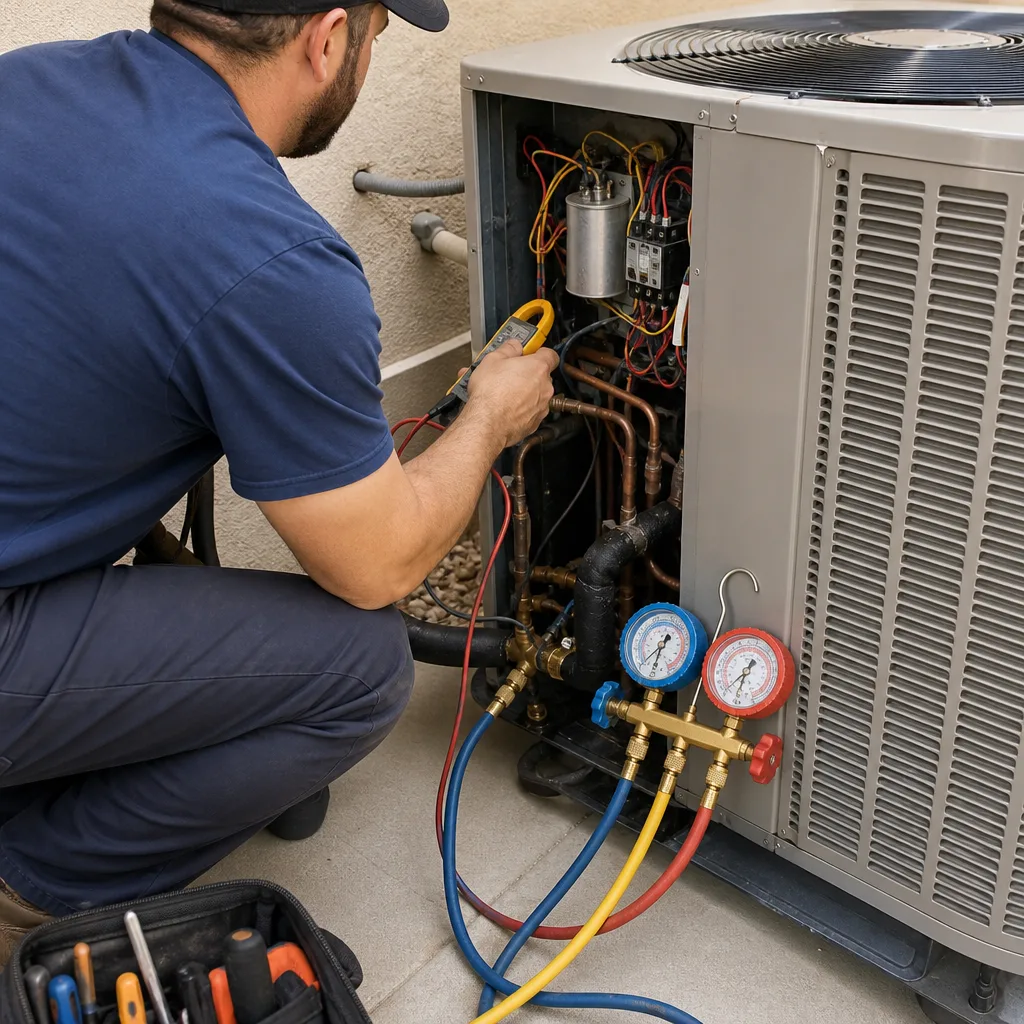
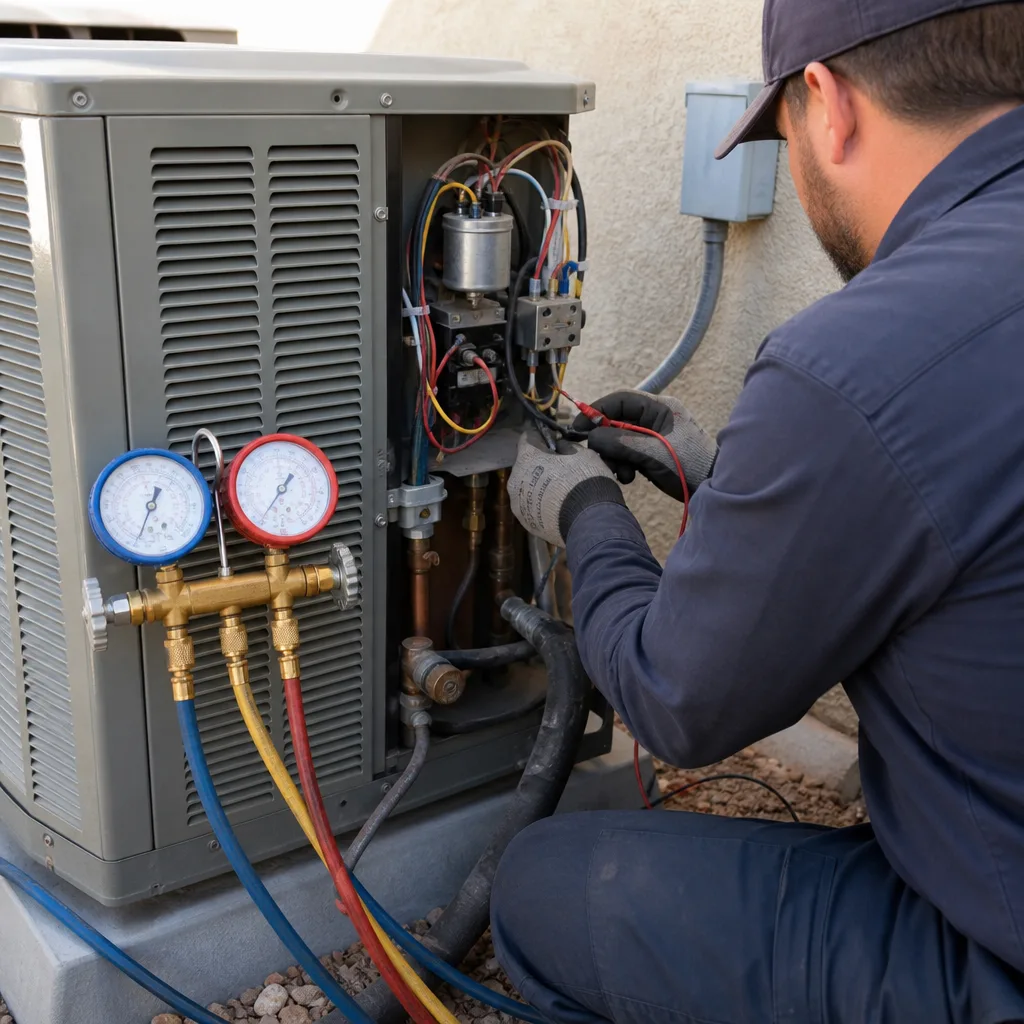
A capacitor is a small cylinder inside the outdoor unit that stores the electrical jolt needed to start the compressor and fan motor. When it weakens, the compressor struggles to start, draws too much current, and the system’s internal safety switch shuts it down. Then the thermostat calls for cooling again, the cycle repeats, and the compressor is taking damage every single time.
Why it’s urgent
A failing capacitor is an $85 part. A compressor destroyed by repeated hard starts is a $1,400 to $2,800 replacement. Every short-cycling cycle moves you closer to the second number. In Henderson, where daytime highs from June through August routinely push systems to their thermal limits, the margin for error is thinner than in cooler climates. A system that short-cycles for two weeks in July is running the compressor at elevated heat for hundreds of extra cycles.
How to confirm at home
- Go outside and stand near the condenser while the system runs. Listen for the compressor (the lower, deeper hum) versus the fan (higher-pitched whir).
- If the compressor hums, stops, then tries again while the fan keeps spinning, you’re hearing a hard start.
- Note the time between start and stop. Anything under 8 minutes in moderate outdoor temperatures is short cycling.
- Check the thermostat’s temperature reading against a separate thermometer. A failing thermostat can also cause short cycling, but the compressor sounds normal.
Triage: fix this week. The part is inexpensive. The labor is straightforward. The consequence of waiting is the most expensive repair in residential HVAC. If you’re in Henderson and hearing hard starts, call us at (775) 593-7060 and we’ll have a background-checked technician out to test the capacitor before the week is over.
Ice on the Line Set: Refrigerant Leak vs. Dirty Coil
Ice forms on an HVAC line set or evaporator coil for two completely different reasons. One is a refrigerant leak, which requires a licensed technician with EPA Section 608 certification to handle. The other is a dirty evaporator coil or clogged air filter, which is a maintenance issue. Both present as ice. The repair cost difference is hundreds of dollars, so knowing which is which matters.
Here’s the distinction in plain terms. A dirty evaporator coil means air can’t move across the coil fast enough to absorb the cold, so the coil temperature drops below freezing and condensation turns to ice. A refrigerant leak means there isn’t enough cooling fluid in the system, so the pressure drops, the coil gets too cold, and the same icing occurs. The ice is the symptom. The cause is either airflow (cheap fix) or refrigerant charge (expensive fix).
How to tell the difference yourself
- Check the air filter first. If it’s clogged with dust, replace it and see if the ice melts over several hours.
- Look at the frost pattern. A dirty coil typically shows even, uniform frost across the coil surface. A low-charge leak often shows frost concentrated near the expansion valve or in one section of the coil.
- Listen near the indoor air handler. A refrigerant leak makes a faint hissing or bubbling sound. A dirty coil makes no sound at all.
- Check the copper line set outside. Frost on the thicker insulated suction line in moderate outdoor temperatures is a stronger signal of low refrigerant than a dirty coil alone.
If you suspect a refrigerant leak, stop running the system. Running a unit with low refrigerant strains the compressor and risks damage far beyond the leak itself. Refrigerant is not a consumable; a system that needs recharge has a leak somewhere, and the leak must be found and repaired before recharging. Henderson’s high-runtime summers mean even a small leak that would go unnoticed in a milder climate becomes obvious fast.
This is a repair where the written guarantee matters. Dalton’s AC Repair in Henderson service includes a full-year written guarantee: if the leak reappears within the year, we return at no charge.
Three Sounds Every Henderson Homeowner Should Be Able to Name
Most warning-sign articles say “strange noises” and move on. That’s not a diagnosis, it’s a shrug. Here are the three specific sounds that Henderson homeowners should be able to identify by name and describe over the phone. Each one points to a different component and a different urgency level.
1. Hard start: a low buzz or hum that stops abruptly
This is the sound of a compressor trying to start and failing. It’s a deep, electrical buzz that lasts two to five seconds, then stops. The fan may continue running. This is almost always a failing capacitor or a compressor that’s already been damaged. Urgency: fix this week. The cost difference between replacing a capacitor and replacing a compressor is about $1,500 on the low end.
2. Rattling or chattering: loose contactor or failing fan motor
A contactor is an electrical relay inside the outdoor unit. When its contacts wear, they chatter instead of closing cleanly. The sound is a rapid clicking or rattling from the electrical compartment of the condenser. This is an inexpensive repair ($120 to $250 typically) but the part is under electrical load, so it’s not a DIY job. Urgency: fix this month, unless the chattering is accompanied by visible sparking, in which case shut the system off at the breaker and call immediately.
3. Hiss or bubbling near the air handler: refrigerant escaping
A hiss is the sound of pressurized refrigerant leaking from a pinhole in the evaporator coil or a braze joint. A bubbling or gurgling sound is refrigerant moving through a coil that’s partially empty. Both mean the same thing: the system is losing charge. Urgency: schedule diagnosis this week. The leak will not seal itself, and the system will lose cooling capacity as charge drops.
These three sounds cover roughly 80% of the sound-related calls we take from Henderson homeowners. Being able to say “I’m hearing a hard start” instead of “it’s making a noise” gets you a faster diagnosis and a more accurate first visit.
The Utility Bill Baseline Method
The cheapest HVAC repair is the one you catch before the system fails. The best detection tool is already in your hands: your NV Energy account history. A sudden, unexplained rise in kilowatt-hours during a month with similar weather is an efficiency signal, not a billing error.
Here’s the baseline method, step by step:
- Log into your NV Energy My Account and pull up the previous 12 months of usage.
- Find two months with similar average outdoor temperatures. In Henderson, May and October are often close in temperature but separated by the entire cooling season.
- Compare daily kilowatt-hour use between those months. If October is using 30-40% more energy than May at similar temperatures, something in the system has degraded.
- Look at your summer months. If July this year used 20% more than July last year with equivalent weather and no changes to the home (new appliances, added occupants, or electric vehicle charging), the HVAC system is the prime suspect.
What’s degrading when efficiency drops? Usually one of these:
- Aging capacitor causing the compressor to draw more current at startup
- Low refrigerant charge forcing the system to run longer to reach setpoint
- Dirty outdoor condenser coil (Henderson’s dust and cottonwood season from April through June is rough on coils)
- Failing blower motor in the air handler running at reduced airflow
- Leaking ductwork in the attic losing conditioned air into unconditioned space
None of these are catastrophic on day one. All of them get worse. A utility bill baseline costs you ten minutes and can identify a $300 repair before it becomes a $1,800 repair. If your numbers don’t add up, call us and we’ll send a technician out to find where the efficiency went. The diagnostic is straightforward: check refrigerant charge, test capacitor, measure airflow, inspect ducts.
Monsoon-Season Symptoms That Aren’t Actually Failures
Every July and August, Henderson gets monsoon moisture. Humidity that normally sits around 10-15% climbs to 40% or higher during afternoon storms. That humidity spike produces a specific set of symptoms that look like equipment failure but are actually operating-condition responses. We take dozens of these calls every monsoon season from homeowners in MacDonald Ranch and Lake Las Vegas who believe their system is failing. For year-round preparation tips, read our Seasonal HVAC Care for Henderson: Year-Round Homeowner’s Guide.
Symptom 1: Water pooling at the base of the indoor unit
Humid air moving across a cold evaporator coil produces more condensation than the drain line can remove during peak humidity. The condensate drain is doing its job; it’s just overwhelmed. This is not a leak. It becomes a real problem only if the drain line is also partially clogged. Clean drain lines with a shop vac or call a technician to flush the line before monsoon season starts.
Symptom 2: The system feels like it’s running constantly
In dry Henderson air, an AC cools primarily by lowering air temperature. In humid air, the system must also remove moisture, which means longer run times to reach the same temperature. The system is not failing. It’s doing more work per hour and taking longer to do it. If the air coming from the vents is 15-20 degrees cooler than the room, the system is operating correctly, monsoon or not.
Symptom 3: A musty smell from the vents
High humidity encourages microbial growth on a coil that’s never been cleaned. The smell is real, and it’s not going to fix itself, but it’s a maintenance issue, not an equipment failure. A coil cleaning and possibly a UV light installation solves it. It’s worth addressing before the smell spreads through the ductwork and into every room.
Symptom 4: Frost on the coil during humid weather
One of the less intuitive monsoon symptoms: a coil that’s slightly low on refrigerant may not ice in dry air, but add monsoon humidity and the dew point rises, and suddenly frost appears. So ice that shows up only during humid weather is a sign of a slow refrigerant leak that was previously below the visibility threshold. That’s a real repair issue.
Here’s the monsoon triage: replace the air filter, confirm the drain line is clear, and check the vent temperature. If the vent air is 15-20 degrees cooler than the room and water is draining properly, let the system run. If frost appears or the vent air is only 5-10 degrees cooler, call for diagnosis.
Uneven Cooling and Airflow Problems by Henderson Neighborhood
Henderson spans a wide range of construction eras, from 1980s ranches in Green Valley to 2010s builds in Inspirada. Each era has its own characteristic airflow problems, and understanding which one applies to your home narrows the diagnosis.
Homes built before 1995 (Green Valley, Old Henderson)
These homes often have metal ductwork that has been sealed and resealed over decades. The most common issue is duct leakage at the plenum connections in the attic: conditioned air bleeding into unconditioned space. Symptoms include one bedroom that never cools, a master suite that’s always 5 degrees warmer than the living room, and higher-than-expected July bills. The fix is duct testing and sealing, not a new AC unit.
Homes built 1995-2010 (Anthem, Seven Hills, MacDonald Ranch)
The signature problem in this era is single-return designs with the return air path located in a central hallway. When bedroom doors are closed, rooms become pressure-positive and stop receiving conditioned air. It’s an airflow design issue that presents exactly like a failing blower. The fix is often jump ducts or undercut door thresholds, not equipment work.
Homes built after 2010 (Inspirada, Cadence, Lake Las Vegas)
Newer Henderson construction tends to have flex duct in the attic that’s often undersized for the system it serves. The symptom is high static pressure: the system runs louder than expected, and airflow at the farthest register is weak. A static pressure test tells the story. In some cases the fix is duct resizing; in others, a blower speed adjustment resolves it.
Every one of these problems presents at the register as “one room is hot.” The fix ranges from a $150 damper adjustment to a $2,000 duct rework. Knowing your home’s construction era gives you a head start and, more importantly, an informed way to evaluate any quote you receive.
Common Mistakes to Avoid
- Ignoring a hard start because the system still cools. The compressor is taking damage every cycle. The $85 capacitor replacement is the cheapest fix in HVAC, and it should tip you off that replacement is overdue when you hear that grinding buzz.
- Adding refrigerant without finding the leak. Refrigerant doesn’t burn off. If a technician adds refrigerant and leaves without locating and repairing the leak, the system will lose charge again. The Garrison Standard at Dalton means a technician who finds a leak shows you where it is, in writing, before repairs begin.
- Replacing a compressor on a system older than 12 years. In Henderson’s climate, a 12-year-old system has already served most of its useful life. Spending $2,800 on a compressor for a system that will need other major repairs within a few years is often the wrong call. Ask for a full system evaluation before committing.
- Closing vents in unused rooms to “save energy.” This restricts airflow and raises static pressure, which increases motor wear and can cause coil freezing. The system was designed for a specific airflow volume; closing vents fights the design.
- Setting the thermostat to 68 degrees during a July heat wave. Systems in Henderson are typically sized for a 20-25 degree temperature split from outdoor conditions. On a 110-degree day, asking for 68 degrees means the system will run continuously and may never reach setpoint. That’s not a failure; it’s a design limit.
- Delaying a coil cleaning because “it still works.” A dirty evaporator coil costs you money every month in efficiency. In Henderson’s dusty environment, coils should be cleaned every 2-3 years, more often if the home has pets or is near ongoing construction.
- Ignoring a musty smell until it spreads. Microbial growth on a coil moves through the ductwork and into the air you breathe. It’s a health issue, not just a comfort issue, and the fix gets more extensive the longer it sits.
When to Call a Professional
There’s a clear line between information and intervention. If you hear a hard start, see frost on the line set, or measure vent air that’s only a few degrees cooler than room air, call a professional. Refrigerant handling requires EPA certification. Electrical components in the condenser carry 240 volts. High-tension fan blades and compressor internals are dangerous to work around without training. We recommend against opening the outdoor unit yourself.
Dalton Heating & Air Henderson offers free estimates in Henderson, with a written price before any work begins and a written guarantee on every repair. Call (775) 593-7060 to schedule a diagnostic visit. A live person answers 24 hours a day, seven days a week.
Frequently Asked Questions
Capacitor failure is the most common repair we make in Henderson, and the failure rate tracks directly with how hard your system runs from May through September. A capacitor is a small electrical component that stores the starting charge for the compressor and fan motor. Henderson’s high-run-hour climate means systems here cycle more frequently than systems in milder regions, so capacitors wear out faster. The good news: it’s an inexpensive repair. The bad news: ignoring it damages the compressor.
Most furnace and AC repairs in Henderson run $150 to $450 depending on the part. Capacitor replacements typically run $85 to $250. Condensate drain line clearing runs $100 to $200. Evaporator coil replacement runs $1,200 to $2,500. Compressor replacement runs $1,400 to $2,800. Full system replacement runs $8,000 to $16,000 depending on efficiency and size. Every repair from Dalton includes a written price before work begins and a written one-year guarantee. Call (775) 593-7060 for a free estimate.
If the system is under 10 years old and the repair is under $1,000, repair almost always makes sense. If the system is over 12 years old and the repair is a compressor or evaporator coil, replacement is worth considering, because the next major failure is likely within a few years. If the system uses R-22 refrigerant (common in units installed before 2010), that’s another point toward replacement, since R-22 is no longer produced domestically and prices have risen sharply. Our team handles Heat Pump Installation in Henderson and will give you a straight answer on repair versus replace, not a sales push.
Yes, and it’s the single most preventable cause of expensive repairs. A clogged filter restricts airflow across the evaporator coil, which causes the coil temperature to drop below freezing. Ice forms, liquid refrigerant returns to the compressor, and the compressor can be destroyed. In Henderson’s dusty climate, filters need checking monthly during peak cooling season. A dirty filter can turn a $15 maintenance item into a $2,500 compressor replacement.
Systems in Henderson are sized for a specific temperature difference, typically 20 to 25 degrees between outdoor and indoor temperature. On a 110-degree day, a system sized to hold 78 degrees indoors is working near its capacity. If you set the thermostat to 68 degrees, the system will run continuously and may still not reach setpoint. That’s not a failure; it’s the design limit. If the system runs constantly at moderate outdoor temperatures, or if vent air is less than 15 degrees cooler than room air, then you have a real problem.
Dalton Heating & Air Henderson answers calls with a live person 24 hours a day, seven days a week, and we schedule same-day service for urgent HVAC issues in Henderson whenever scheduling capacity allows. Every call includes a written price before work begins, and every repair carries a written one-year guarantee. For a Furnace Repair in Henderson or AC emergency, call (775) 593-7060.
The Bottom Line
Henderson’s climate punishes HVAC systems harder than most of the country, which means warning signs here are both more common and more consequential. The skill is matching the symptom to the component: a hard start is a capacitor, a hiss is a refrigerant leak, a chattering is a contactor, and ice is either an airflow problem or a charge problem, diagnosable by pattern. Use your NV Energy history as an early warning system. Get familiar with your home’s construction-era airflow quirks. And when the symptom points to a component that requires training and certification to handle, get it handled by a professional who puts the price in writing before the first tool comes out. For more guides & resources, visit our blog.
Written by Marco Benitez, Owner at Dalton Heating & Air Henderson, serving Henderson since 2003.
See the difference
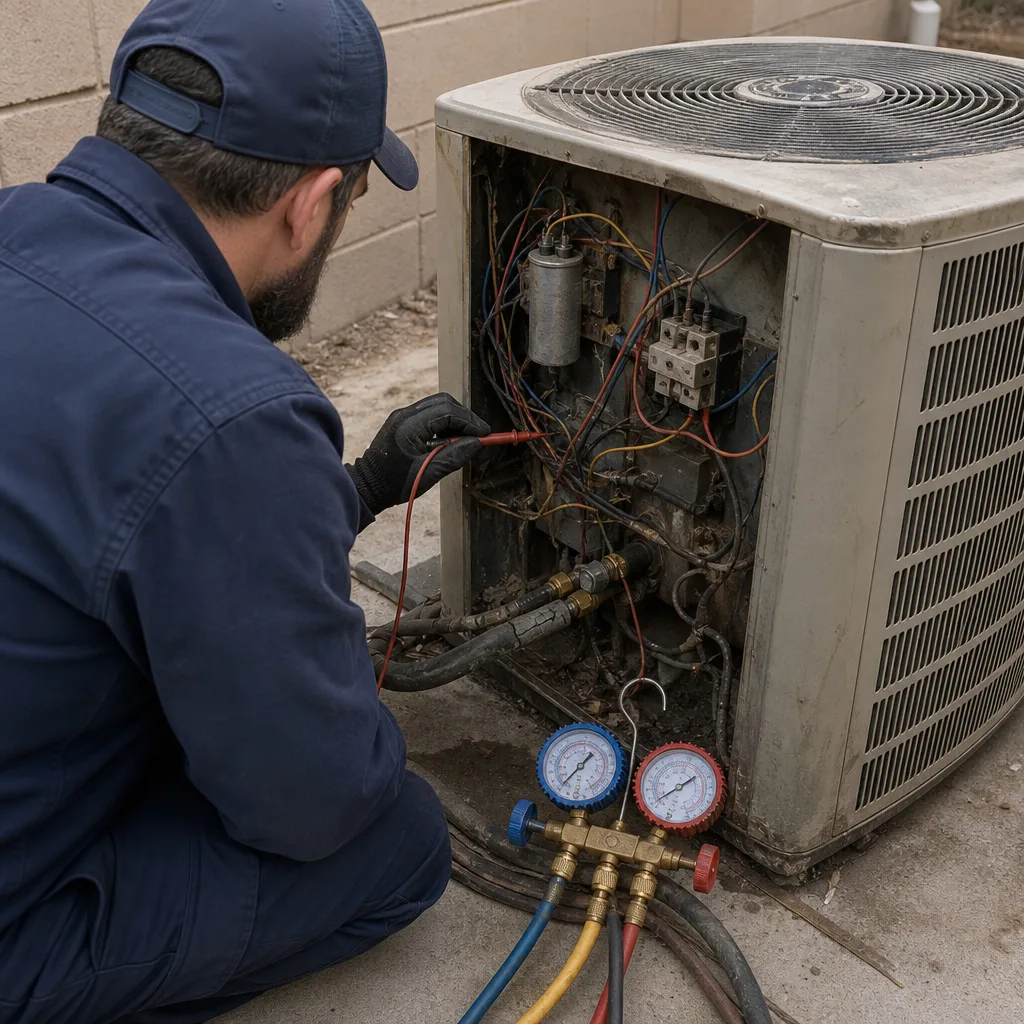 Before
 After
After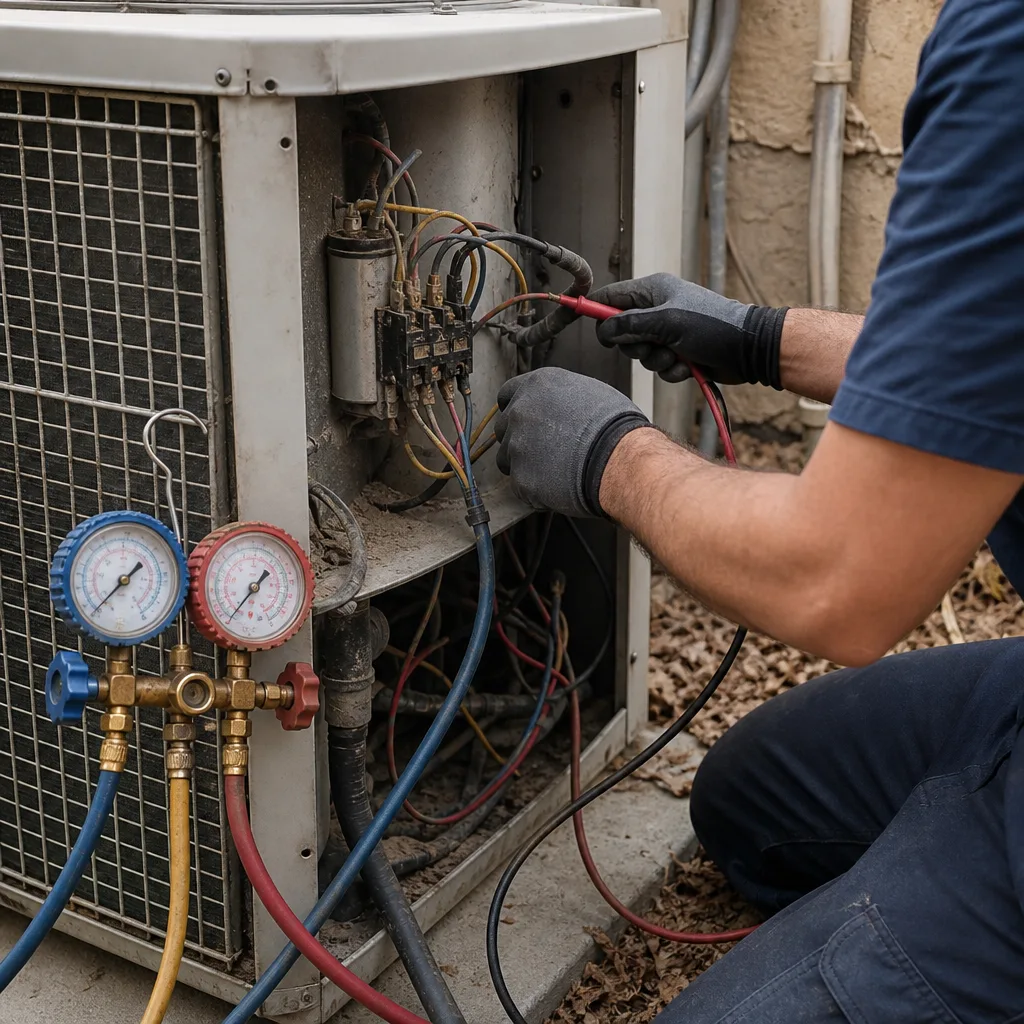 Before
 After
After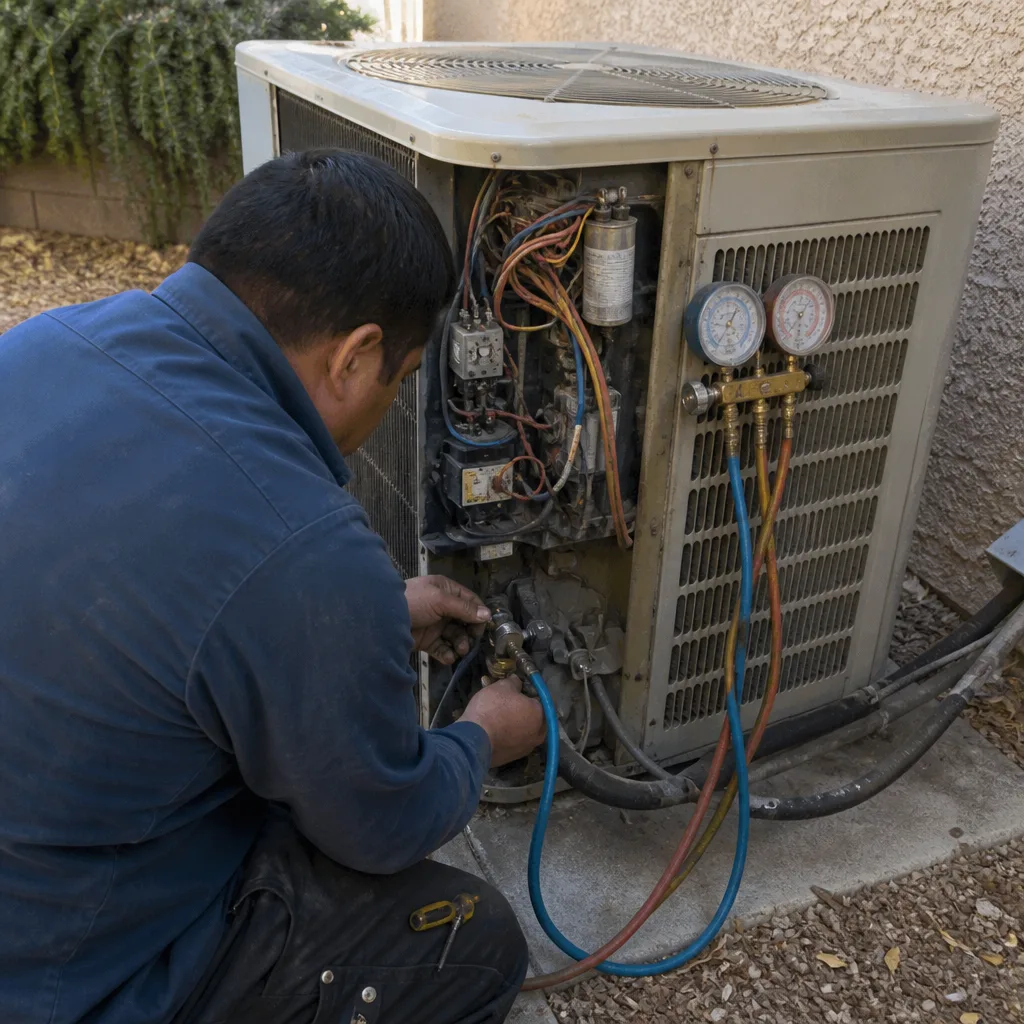 Before
 After
After