
Last updated October 16, 2026
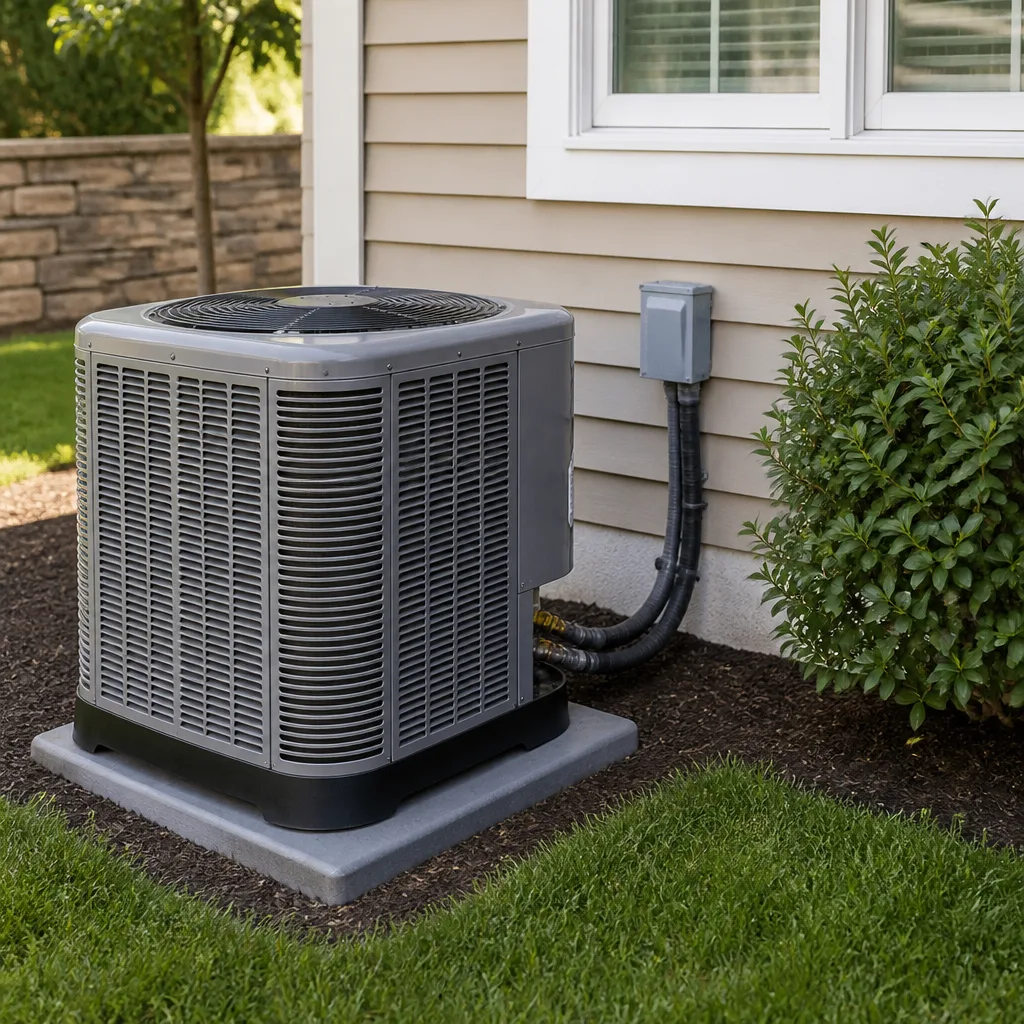 AC repair
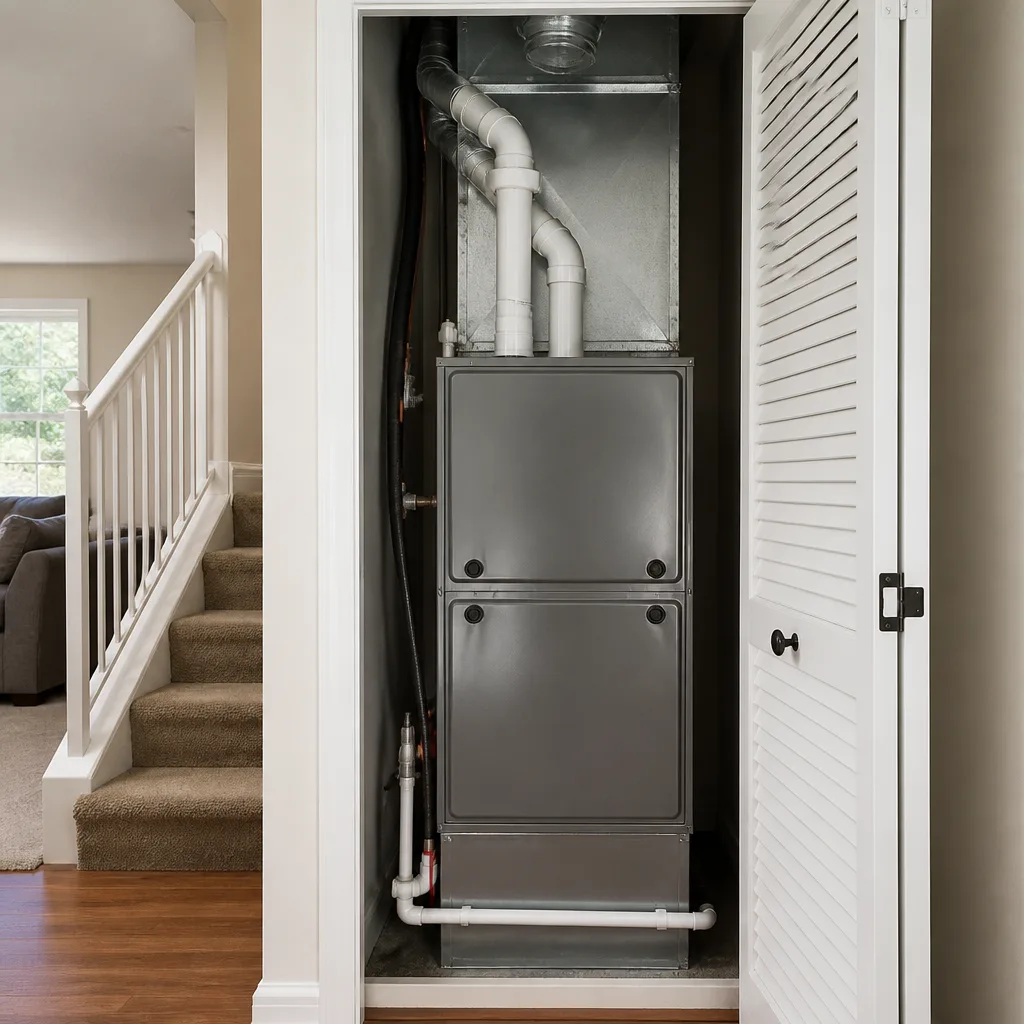 Furnace & heating
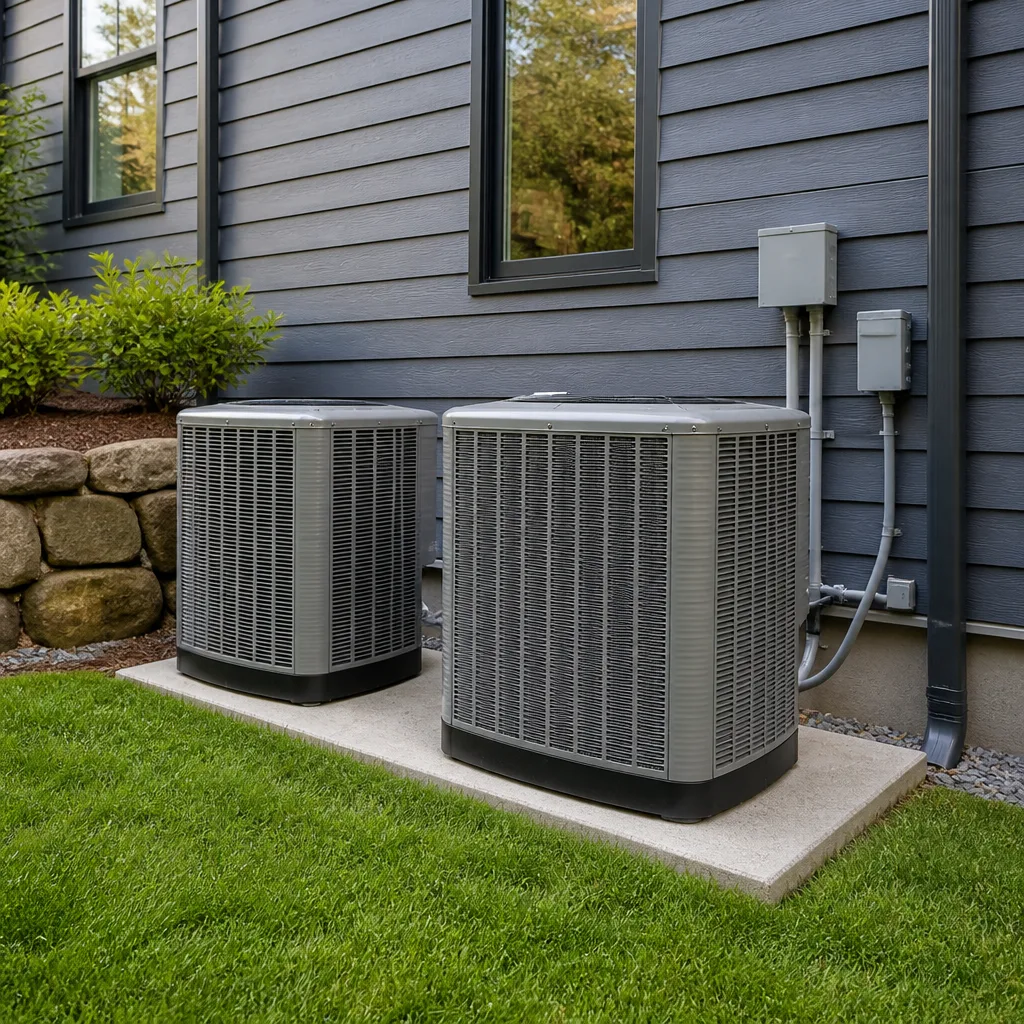 Heat pumps
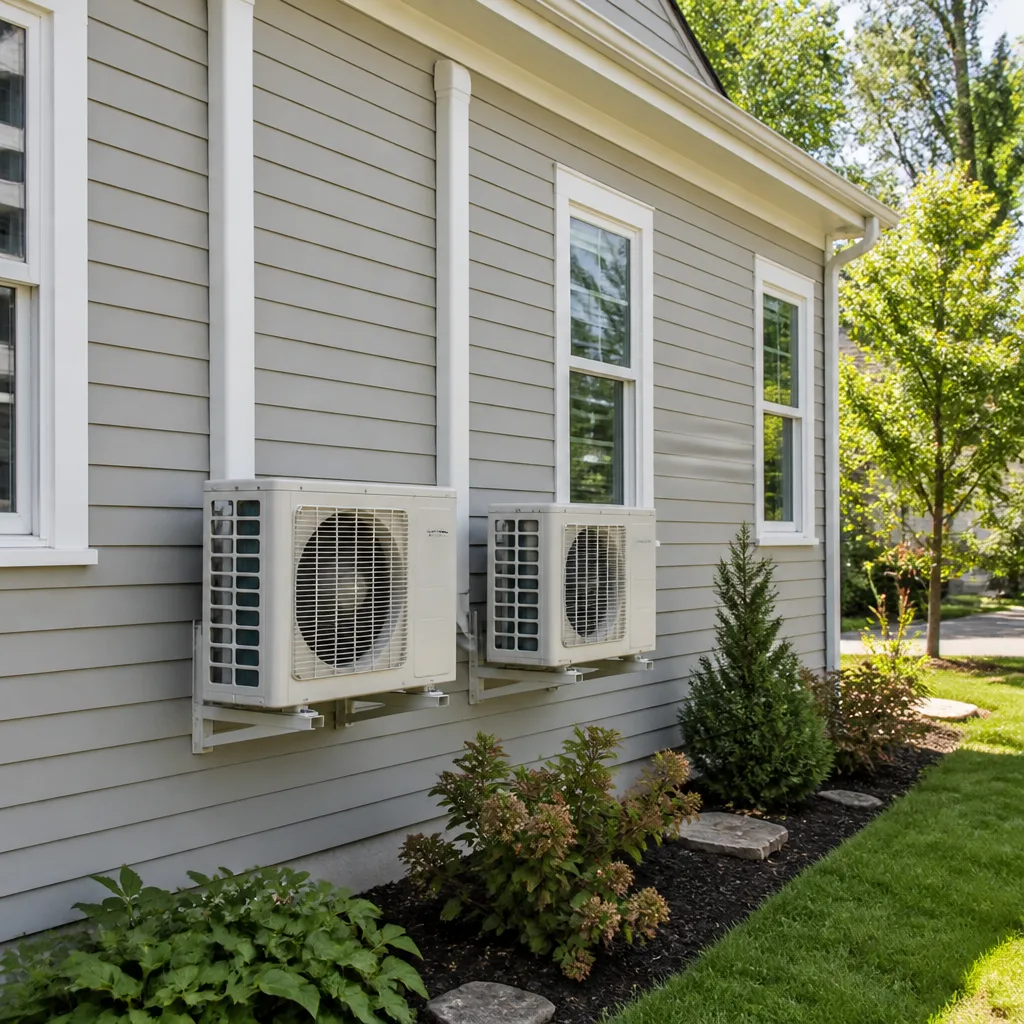 Ductless mini splits
 Carrier
 Trane
Trane Goodman
Seasonal tune-up and full diagnostic on your Carrier, Trane, or Goodman system - readings shown to you before any repair is proposed
Diagnosis first, numbers second - you approve the repair price before a single part goes in.
Get your free estimateHVAC Permits, Codes & Inspections in NV: What You Need to Know
If your contractor installed a new air handler without pulling a Clark County mechanical permit, your homeowner’s insurance policy may deny a related claim, and your title company will flag the unpermitted work when you list the house. The contractor is long gone. You’re the one holding it. This guide breaks down exactly which HVAC jobs trigger the Clark County permit requirement, what inspectors actually look at during a mechanical inspection, how to verify whether work done by a prior owner was ever permitted, and what the HOA layer adds in Henderson master-planned communities like Anthem, Green Valley Ranch, and Inspirada. For more guides & resources, see our blog.
Quick Answer
In Clark County, Nevada, an HVAC permit is required for any equipment replacement exceeding 2 tons of capacity, any new duct installation, and any refrigerant line set changes. The current mechanical permit fee for a standard residential AC or furnace swap runs roughly $85 to $160 depending on valuation, plus a $40 to $60 inspection fee. If the work was done without a permit, the liability for code violations, insurance denial, and resale complications sits with the property owner, not the contractor who skipped the paperwork.
Styles & brands we work with
Table of Contents
- Which HVAC Jobs Require a Permit in Clark County
- Current Clark County HVAC Permit Fee Schedule
- What a Nevada NEC and IMC Inspection Actually Covers
- How to Verify a Prior Owner’s HVAC Work Was Permitted
- The HOA Layer: CC&R Restrictions in Henderson Communities
- What Final Inspection Signoff Does for Your Warranty
- Insurance and Liability: The Unpermitted Work Problem
- Common Mistakes to Avoid
Which HVAC Jobs Require a Permit in Clark County
Clark County operates under the 2018 International Mechanical Code (IMC) with local amendments and the Nevada Electrical Code (NEC). The permit trigger list is specific, and some of it surprises Henderson homeowners who assumed a simple swap needed no paperwork. Our HVAC Warning Signs: A Henderson Homeowner’s Reference Guide covers other common surprises.
A mechanical permit is required in Clark County when:
- Any equipment replacement over 2 tons of capacity. This covers most residential air conditioners and heat pumps. A 2.5-ton, 3-ton, or 5-ton split system swap requires a permit, full stop. The only exception is a like-for-like replacement of a unit 2 tons or smaller, and even then, the mechanical contractor is supposed to verify the electrical disconnect and line set before calling it compliant.
- Any new duct installation or duct modification. Adding a new supply run, relocating a return, extending a trunk line, or balancing a system with new duct branches all trigger a permit. The county treats ductwork as a mechanical system, not trim work.
- Any refrigerant line set change. Replacing or rerouting the copper lines that carry refrigerant between the indoor coil and outdoor condenser requires a mechanical permit. This is the one most commonly skipped, because a line set swap often happens during a system relocation rather than a full replacement.
- A change in equipment location. Moving a condenser from the west side of the house to the north side, or relocating an air handler from a closet to the attic, requires a permit even if the equipment itself is the same capacity.
- New electrical circuits for HVAC equipment. Running a new 240-volt circuit for a condenser, upgrading a breaker, or adding a disconnect box falls under the electrical permit, which is often pulled alongside the mechanical permit as a combined application.
- Gas line work for a furnace or boiler. Any modification to the gas supply line serving a furnace requires a mechanical permit and sometimes a separate gas permit. This includes moving the shutoff valve or changing line sizing.
In our experience across Henderson, the jobs that most often go unpermitted are attic air handler swaps in older Green Valley Ranch homes and condenser relocations in Anthem where the HOA required screening changes. A contractor quotes the job without a permit line item, the homeowner never thinks to ask, and the problem surfaces years later at resale.
Current Clark County HVAC Permit Fee Schedule
The fee structure changes periodically, but as of the current schedule, a residential mechanical permit in unincorporated Clark County and the City of Henderson runs on a valuation-based table. Here is what you can expect to pay on a typical single-family HVAC job:
- Mechanical permit for a standard AC or heat pump replacement (up to $5,000 valuation): $85 to $110
- Mechanical permit for a furnace replacement with gas line verification (up to $5,000 valuation): $85 to $120
- Mechanical permit for a full system replacement with duct modification ($5,000 to $10,000 valuation): $135 to $185
- Electrical permit for a new condenser circuit or disconnect (residential): $50 to $90
- Inspection fee (mechanical or electrical, per inspection): $40 to $60
- Re-inspection fee if the first inspection fails: $40 to $60
Henderson is an incorporated city, but it uses Clark County’s building division for mechanical permits and inspections through an interlocal agreement. That means the forms, fees, and inspection scheduling are the same whether your house sits in Green Valley, MacDonald Ranch, or a newer Inspirada build. See our Seasonal HVAC Care for Henderson: Year-Round Homeowner’s Guide for maintenance timing tied to these schedules.
A reputable HVAC contractor in Henderson will list the permit fee as a separate line item on the written quote. At Dalton Heating & Air Henderson home, every job includes a written price before any work begins, with the permit fee broken out by name so you see exactly what the county charges and what the labor costs. We do not bury permit fees in a lump-sum number, because that is how homeowners get confused about what they paid for.
What a Nevada NEC and IMC Inspection Actually Covers
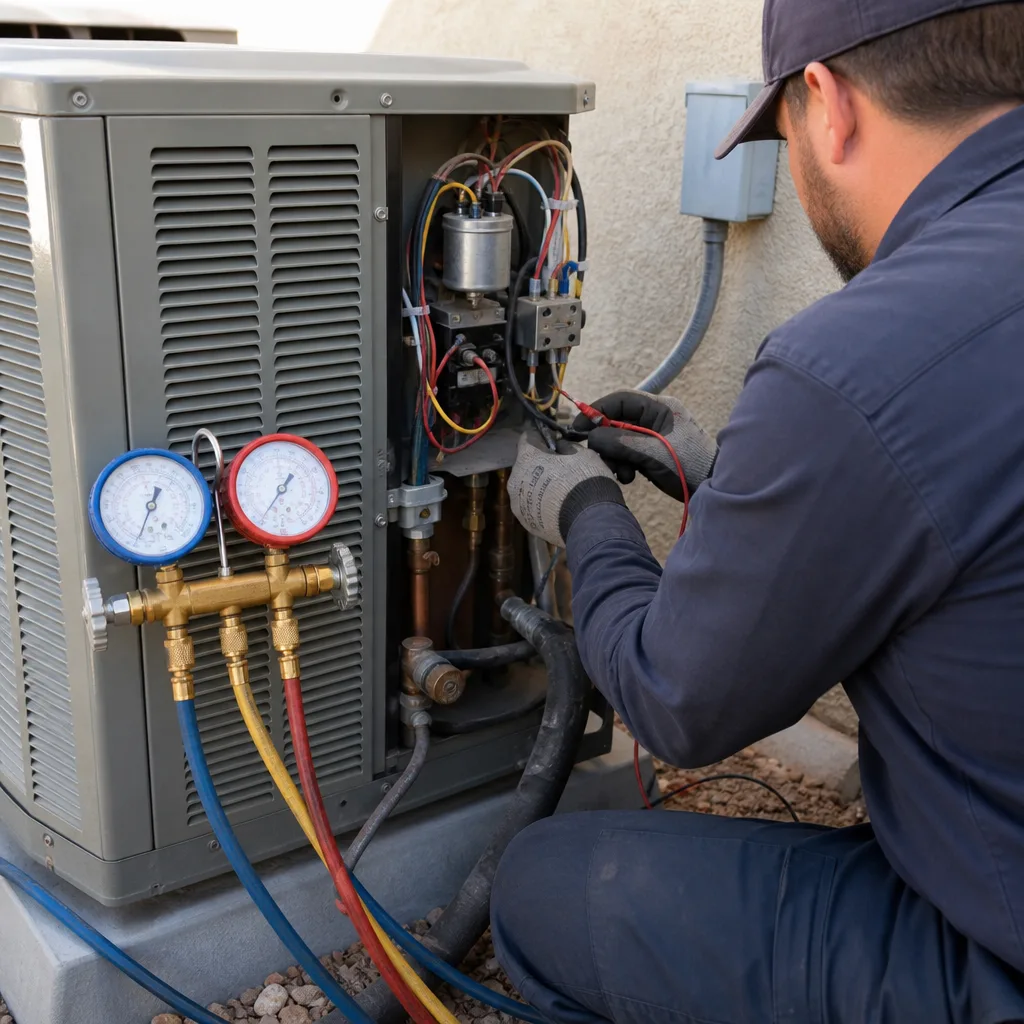
When a Clark County inspector shows up for a mechanical or electrical inspection on HVAC work, they are working from the IMC and NEC checklists. The inspection is not a performance test of the equipment. It is a code compliance review. Our AC Repair Maintenance Checklist for Henderson Homeowners aligns closely with what inspectors review. Here are the five physical items an inspector checks on a typical AC or heat pump replacement in Henderson:
- Disconnect and overcurrent protection. The inspector verifies that the condenser has a dedicated disconnect box within sight of the unit, that the breaker is sized correctly for the nameplate rating, and that the wire gauge matches the ampacity. This is the number one reason inspections fail in older Henderson homes where a prior install ran 10-gauge wire on a circuit that needed 8-gauge.
- Condenser clearance and pad. The IMC requires specific clearances around the outdoor unit for airflow and service access, typically 30 inches on the service side and 12 inches on the other sides. The inspector also checks that the unit sits on a solid pad or stand, level and secured. In Henderson’s caliche-heavy soil, settling slabs are common, and an unlevel condenser can fail this check.
- Refrigerant line set and condensate drainage. The inspector verifies that the line set is supported, that the suction line is insulated along its full run, and that the condensate drain terminates properly, not dumping against the foundation or into a HOA common area. Henderson’s summer humidity spikes during monsoon season make condensate drainage a real code issue, not a formality.
- Equipment and duct labeling. The inspector checks that the air handler and condenser carry their nameplate ratings, that the ductwork is sealed with approved mastic or metal tape (not duct tape), and that any new duct runs are sized to the Manual D calculation submitted with the permit application.
- Gas line and venting (furnace jobs only). On a furnace replacement, the inspector checks the gas line sizing, verifies the shutoff valve is within 6 feet of the appliance, and confirms the venting is correctly sloped and terminated per IMC Chapter 8. Failed venting is a carbon monoxide risk, and inspectors in Henderson treat it seriously.
The paperwork side of the inspection covers the permit application, the load calculation if new ductwork or a capacity change was involved, and the contractor’s license verification. If any of that is missing, the inspector will not even schedule the physical walkthrough.
How to Verify a Prior Owner’s HVAC Work Was Permitted
If you bought a Henderson home and suspect the previous owner swapped the AC or furnace without a permit, you can confirm it yourself. The Clark County permit portal keeps records going back to the early 1990s in most areas, and the lookup process is free. Here is the step-by-step:
- Go to the Clark County Building Department’s permit search page. The county uses an online portal called the Citizen Access system. You do not need an account to run a search.
- Enter your address or parcel number. The parcel number is on your property tax statement or through the Clark County Assessor’s website. Using the parcel number returns more accurate results than a street address, because some Henderson addresses have changed over the years.
- Filter by permit type. Look for “Mechanical,” “MEC,” or “HVAC” in the permit type field. Electrical permits for a new condenser circuit will show up separately under “Electrical” or “ELE.”
- Check the permit dates against the equipment age. The condensing unit outside carries a manufacture date on its nameplate, usually in the serial number as a month-year or week-year code. If the equipment was manufactured in 2018 but there is no mechanical permit on record for 2018 or 2019, the work was likely unpermitted.
- Contact the Building Department directly if the portal returns nothing. Some older permits, especially anything before 2005, were not digitized. Call the Clark County Building Department at their public line and ask for a records search. Have your parcel number ready.
We have walked Henderson homeowners through this exact process after they discovered a mismatched condenser and air handler combination that no permit could have covered. In one Green Valley Ranch home, the outdoor unit was a 4-ton Goodman, the indoor coil was a 3-ton Rheem, and there was no mechanical permit on record. That system never performed correctly, and the homeowner inherited the fix.
The HOA Layer: CC&R Restrictions in Henderson Communities
Clark County code is only the first layer. If your home sits inside a Henderson master-planned community with a homeowners association, the CC&Rs add a second, stricter set of rules that sit on top of the county requirements. The HOA approval process is separate from the county permit process, and neither one substitutes for the other.
Henderson HOAs commonly enforce:
- Condenser screening requirements. Many Anthem, MacDonald Highlands, and Lake Las Vegas communities require a screen wall or landscaping barrier around the outdoor condenser so it is not visible from the street or a neighbor’s yard. The screen must maintain the county’s clearance requirements, which means the HOA and county rules must be satisfied at the same time.
- Equipment color and style restrictions. Some HOAs specify paint color for condenser cabinets. A white unit where the CC&Rs call for a tan or earth-tone unit can start with a letter and end with a demand to replace a brand-new piece of equipment. York and Bryant both offer cabinet color options, but the contractor has to know the HOA rule before ordering.
- Rooftop unit restrictions. In communities with flat-roof section, rooftop-mounted AC units are either prohibited outright or restricted to specific roof zones so they are not visible from common areas. If your home has a rooftop unit and the HOA forbids it, replacing it with another rooftop unit does not cure the violation.
- Noise limits. CC&Rs sometimes set decibel limits at the property line. A condenser rated above the limit, even if it meets county code, violates the HOA covenant. Daikin and Rheem publish sound ratings for every unit, and a good contractor checks the spec sheet against the CC&R before quoting the job.
The practical takeaway for Henderson homeowners is this: get HOA approval in writing before the equipment is ordered, and make sure the contractor has that approval before installation day. The county permit and the HOA approval are two separate documents, and both stay on file with the property.
What Final Inspection Signoff Does for Your Warranty
A common misconception in Henderson is that the manufacturer warranty on a new AC or furnace starts the day the equipment is installed, no questions asked. That is not how the warranty terms actually work for several major brands.
Rheem, York, Daikin, and Bryant all include language in their residential warranty documents stating that the equipment must be installed in compliance with all applicable codes and ordinances. When the equipment is installed in a jurisdiction that requires a permit, the warranty claim can require proof that a permit was pulled and that the final inspection passed. If you cannot produce that paperwork, the manufacturer can deny a compressor or heat exchanger claim.
This is not theoretical. We have seen a Henderson homeowner denied a Daikin compressor warranty because the installing contractor, who was not licensed in Nevada, never pulled a Clark County permit. The homeowner had a 12-year compressor warranty on paper and nothing to claim against it. The final inspection signoff is the document that makes the warranty real.
Beyond the manufacturer warranty, a permitted installation protects the labor warranty too. A Clark County inspection creates a paper trail that ties the equipment, the contractor, and the installation date to a specific permit number. If the contractor goes out of business, that paper trail is still on file with the county. Without it, you have no independent record of who did the work or when.
Insurance and Liability: The Unpermitted Work Problem
Here is the part most Henderson homeowners never hear until it is too late. When a contractor performs HVAC work without a required Clark County permit, the liability for that decision does not end when the contractor drives away. It attaches to the property, which means it attaches to you.
Homeowner’s insurance policies in Nevada typically contain an exclusion for loss or damage caused by unpermitted work. If an unpermitted furnace install leads to a fire, and the insurance adjuster determines the unpermitted work contributed to the loss, the claim can be denied. This is not a hypothetical bolt from the blue. Adjusters in Clark County routinely check the permit record on fire and water-damage claims involving HVAC equipment.
The title company angle is just as real. When you sell a Henderson home, the buyer’s title company can run a permit search as part of due diligence. Unpermitted HVAC work is a disclosed defect in many transactions, and it becomes a negotiation point. The seller either pays to bring the work into compliance, which means pulling a permit after the fact, opening walls if necessary, and paying for an inspection, or reduces the sale price to compensate.
This is why our approach at AC Repair in Henderson treats permits as a non-negotiable part of the job. The Garrison Standard, the operating code we have worked under since 2003, says do the job by the book. That includes the permit paperwork. Every installation and replacement we perform includes the permit fee in the written quote, and we do not start work until the permit number is issued.
Common Mistakes to Avoid
- Assuming a “like-for-like” swap needs no permit. The 2-ton threshold in Clark County means most residential equipment replacements require a mechanical permit. If you do not see a permit line on the quote, ask why.
- Paying the contractor to “handle the permit” without getting the permit number. Some contractors collect a permit fee and never file. Ask for the permit number before the work starts and verify it in the county portal.
- Skipping the HOA approval because the county permit covers it. Henderson HOAs are a separate layer. A county permit does not satisfy a CC&R screening requirement, and an HOA violation can cost more than the equipment itself to cure.
- Not checking the contractor’s Nevada license. The Nevada State Contractors Board keeps a searchable license database. A contractor without an active Nevada license cannot pull a Clark County permit, which means the work is automatically unpermitted.
- Leaving the final inspection unscheduled. A permit is not complete until the final inspection passes. An open permit on the record is still flagged at resale, just like an unpermitted job.
- Throwing away the permit paperwork after the job. Keep the permit number, the final inspection report, and the contractor’s invoice together. You will need them for a warranty claim or a resale disclosure.
- Assuming new construction means everything was permitted. Builders pull permits for the original HVAC installation, but subsequent replacements by previous owners are not always filed. Run the permit search before you assume.
See the difference
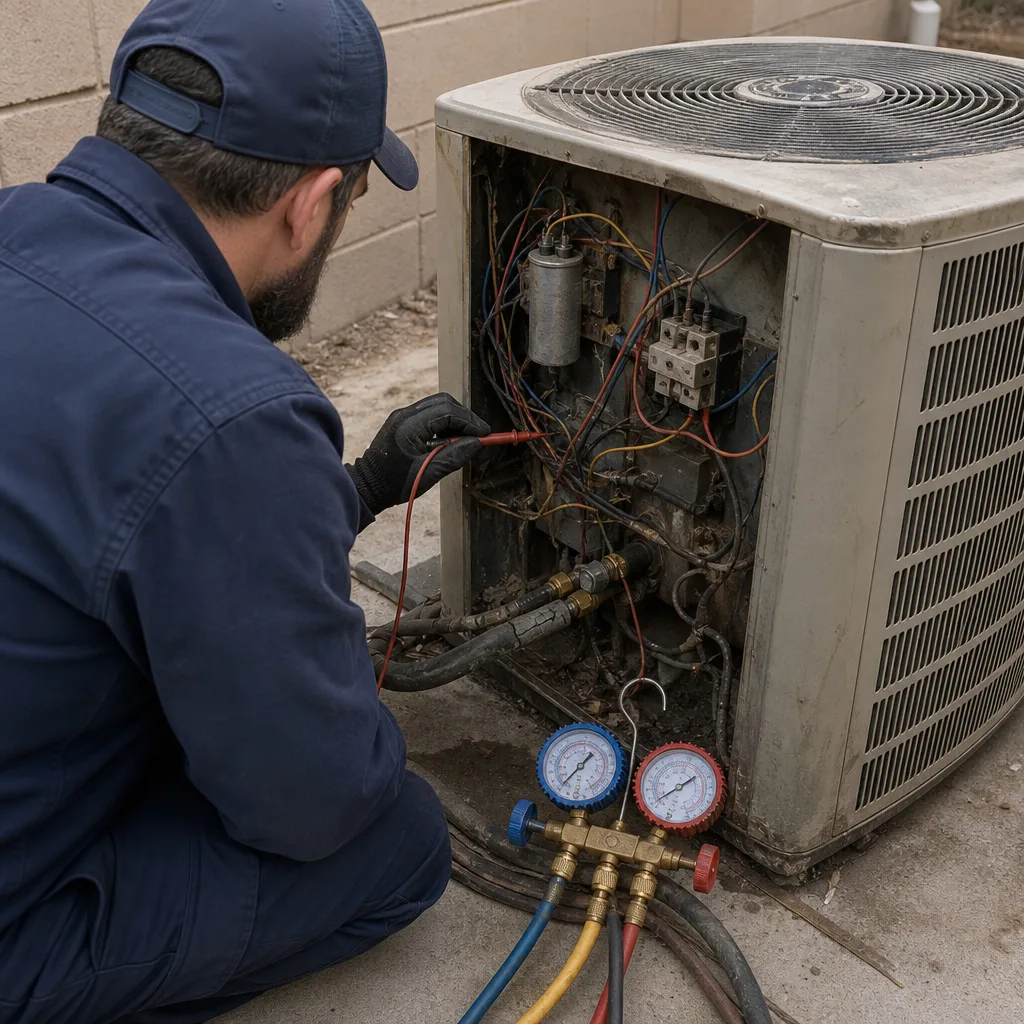 Before
 After
After Before
 After
After Before
 After
AfterWhen to Call a Professional
If you have a condenser on the side of your Henderson house that was replaced in the last ten years and you cannot find a Clark County mechanical permit, call a licensed HVAC contractor to evaluate the system and advise on bringing it into compliance. The same applies if you are planning to install or replace a Heat Pump Installation in Henderson, which always requires a permit and usually an electrical permit alongside it. If the condensate drain is dumping against the foundation, if the gas line on your furnace looks like a handyman job, or if you are buying a home and the inspection report flags unpermitted HVAC work, do not try to diagnose the code issues yourself. A trained professional can identify what needs correcting and pull the paperwork to get it fixed. Dalton Heating & Air Henderson offers free estimates in Henderson. Call (775) 593-7060 and we will come out, assess the system, and give you a written price that includes whatever permit work is required.
Frequently Asked Questions
Yes, a mechanical permit is required for any AC or heat pump replacement over 2 tons of capacity in Clark County. Most residential systems are 2.5 tons or larger, so the practical answer is that almost every AC replacement in Henderson needs a permit. The permit is pulled by the licensed contractor, and the fee is a separate line item on the job quote. Call (775) 593-7060 for a written estimate that includes the permit cost.
A residential mechanical permit for a standard AC or furnace replacement in Clark County typically runs $85 to $185 depending on the job valuation, plus a $40 to $60 inspection fee. Electrical permits for a new condenser circuit add $50 to $90. These are county fees only. The labor to complete the work is separate.
Unpermitted HVAC work in Henderson creates liability for the property owner. Your insurance company may deny a related claim, a future buyer’s title company will flag the unpermitted work at resale, and the manufacturer may void the equipment warranty. The fix is to have a licensed contractor evaluate the work, correct any code violations, and pull a permit after the fact.
Clark County allows a homeowner to pull a mechanical permit for work on a property they own and occupy, but the work must still pass inspection, and the homeowner takes on full legal responsibility for code compliance. For gas line work, an electrical circuit, or refrigerant handling, a licensed contractor is required. Refrigerant handling in particular requires EPA Section 608 certification, which most homeowners do not have.
If your home is in a Henderson community with a homeowners association, yes. The HOA approval is separate from the Clark County permit and usually covers condenser screening, equipment placement, and noise limits. Get HOA approval in writing before the equipment is ordered. A county permit and an HOA approval are two different documents, and both stay on file with the property.
Manufacturers including Rheem, York, Daikin, and Bryant include language in their warranty documents requiring installation in compliance with local codes. When a jurisdiction like Clark County requires a permit, the warranty claim can require proof that a permit was pulled and the final inspection passed. Without that documentation, the manufacturer can deny a compressor or heat exchanger claim. Call (775) 593-7060 if you need help locating your permit record or scheduling a Furnace Repair in Henderson.
The Bottom Line
In Clark County, the permit is not paperwork theater. It is the document that protects your insurance coverage, your equipment warranty, and your ability to sell the house without a title company flag. The trigger list is specific: any replacement over 2 tons, any new ductwork, any line set change. The inspection is a code compliance review, not a performance test, and the five physical items an inspector checks are the same five items a good contractor verifies before calling for the inspection. In Henderson, the HOA layer adds screening and noise rules on top of the county code, and neither substitutes for the other. If you are uncertain whether your HVAC system has a clean permit history, run the Clark County portal search. If the search comes up empty and the equipment looks newer than the record suggests, call a licensed contractor. We have been doing this work in Henderson since 2003, and the homeowners who ask about permits before the job starts are the same ones who never get burned at resale.
Written by Marco Benitez, Owner at Dalton Heating & Air Henderson, serving Henderson since 2003.